


End of the World
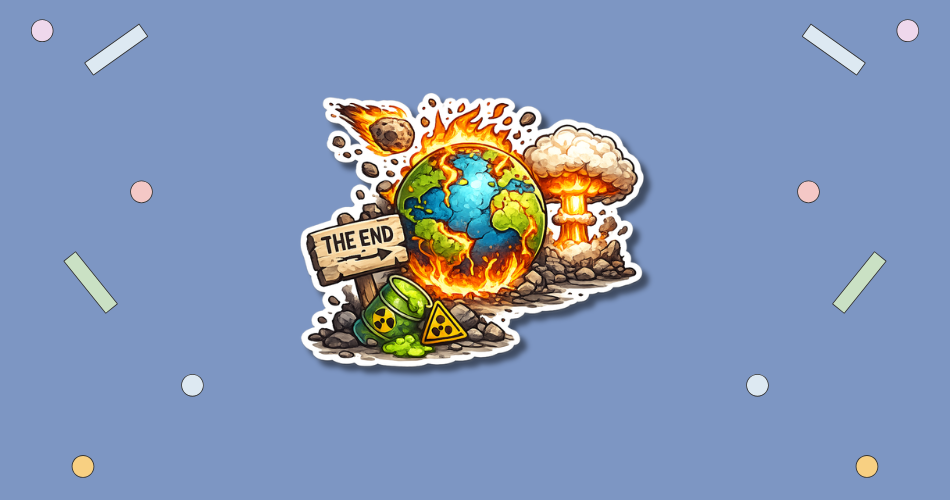
End of the World is observed every year on May 21. In 2027, this date falls on a Friday. This informal, tongue-in-cheek observance looks back at failed apocalypse predictions and the strange hold they can have on public imagination. It is not a religious holiday or an official day of warning. Instead, it gives people a playful way to reflect on fear, rumor, survival, and the long human habit of predicting dramatic endings. 1
Contents
HT Meter
Does this day matter to you?
Tap the meter if it does, and say whether you will be celebrating — that is what opens the wishes from everybody else who will be.
This day matters to me
0 Be the first to say so
Just getting started
0 Let others know you’re in.
Wishes, greetings and stories
Join the celebration to share a wish, a greeting, or how this day goes in your house.
These are kept for the people celebrating this day. Say you will be celebrating to read them and to add your own.
You have already shared something here recently.
Nothing here yet. Yours would be the first.
History of End of the World
End of the World is closely tied to May 21, 2011, when radio preacher Harold Camping predicted that Judgment Day would begin on that date. His prediction received major public attention, and some followers spent money and time spreading the message before the date passed without the expected event. Camping later changed his prediction to October 2011, which also passed without the world ending. The modern observance uses May 21 as a humorous marker of that failed prediction rather than as a serious warning.
Predictions about the end of the world are far older than one modern media event. Religious movements, public panics, astrology, numerology, and speculative theories have all produced end-times dates that did not come true. Today, End of the World is mostly understood as a lighthearted day about skepticism, perspective, and the relief of ordinary life continuing. It also points to a serious lesson: alarming claims deserve careful thinking before they are believed or shared.
Why is End of the World important?
End of the World is important because it turns a frightening idea into a subject for perspective and humor. Failed doomsday predictions show how quickly fear can spread when people are anxious, uncertain, or looking for simple answers to complex problems. The day encourages people to pause before accepting dramatic claims, especially when those claims are unsupported. It also makes room to talk about the difference between real risks and sensational predictions.

Rapture Party Day
The day can also be useful as a reminder that the future is not something people can control through panic. Real problems such as natural disasters, public health emergencies, environmental change, and personal crises call for practical preparation, not prophecy. End of the World keeps the tone light, but it still rewards clear thinking. A calm mind is better prepared than a frightened one.
- It encourages healthy skepticism.
- It makes fear easier to discuss.
- It separates real risks from rumors.
- It reminds people that predictions can fail.
- It adds humor to a heavy subject.
How to Celebrate End of the World
Make it yours
How would you like to spend End of the World?
Tick what fits you, and we will put together ideas made for this day — not for any day.
Watch a disaster movie, read about a famous failed prediction, or make a joking “survival” meal with friends. The day works best when the humor is gentle rather than cruel, especially because some past predictions caused real stress for believers and families. A playful party theme, a trivia night, or a list of things people are glad still exist can fit the mood. Keep the focus on perspective, not panic.
Use the day to check a few practical basics, too. Look over emergency supplies, update important contacts, or talk with family about what to do during storms, power outages, or other realistic situations. That kind of preparation is useful without giving attention to wild claims. End of the World can be funny, but calm readiness is the best punchline.
- Host a lighthearted movie night.
- Make a “still here” playlist.
- Read about a failed prophecy.
- Check flashlights and batteries.
- Share good news from the year.
End of the World Dates
| Year | Date | Day of the week |
|---|---|---|
| 2026 | May 21 | Thursday |
| 2027 next | May 21 | Friday |
| 2028 | May 21 | Sunday |
| 2029 | May 21 | Monday |
| 2030 | May 21 | Tuesday |
Sorry to hear you didn't enjoy this article...

World Contact Day
Help us make it better!