


Global Accessibility Awareness Day
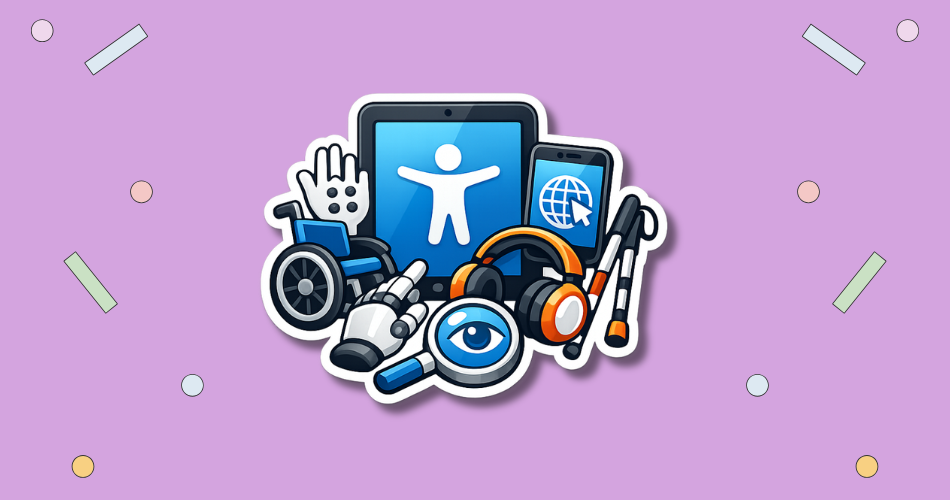
Global Accessibility Awareness Day is observed on the third Thursday of May. In 2027, this date falls on May 20. The day focuses on digital access and inclusion, especially for people with disabilities and impairments who use websites, apps, software, documents, and online services. It is an awareness-based observance, so the tone is practical, educational, and respectful. The day asks designers, developers, content teams, business leaders, educators, and everyday technology users to look more closely at barriers that can keep people from using digital tools independently. 1 2
Contents
HT Meter
Does this day matter to you?
Say that it does, and say whether you will be marking it. Both are anonymous to nobody but kind to everybody.
This day matters to me
0 Be the first to say so
Quietly remembered
0 Nobody has said so yet
Notes of remembrance
Join those marking this day to share a word, a memory, or the reason it matters to you.
These notes are kept for the people marking this day. Say you will be marking it to read them and to leave your own.
You have already shared a note here recently.
No notes yet. Yours would be the first.
History of Global Accessibility Awareness Day
Global Accessibility Awareness Day began with a blog post by Los Angeles-based web developer Joe Devon, who called for greater attention to accessibility knowledge among developers. Jennison Asuncion, an accessibility professional from Toronto, found the idea, contacted Devon, and the two joined forces to help turn it into a broader annual event. The observance launched in 2012 and has since been marked each year on the third Thursday of May. In 2026, that date is May 21, and it marks the 15th annual Global Accessibility Awareness Day.
The day is now connected with digital accessibility in a wide range of settings, including websites, mobile apps, online documents, software, videos, forms, and digital services. Its focus is not limited to one profession, because accessibility depends on many decisions made by teams across design, writing, coding, testing, policy, procurement, and support. The GAAD Foundation, launched in 2021, works to push technology and digital product development toward treating accessibility as a core requirement rather than a late-stage fix. Today, the observance is mainly used to start conversations, host training, review digital products, and help people understand how inaccessible technology affects daily life.
Why is Global Accessibility Awareness Day important?
Digital accessibility matters because everyday life now depends heavily on online systems. People use digital tools to apply for jobs, manage money, schedule medical care, learn, shop, communicate, complete government forms, and participate in school or work. When a website cannot be navigated by keyboard, a video lacks captions, an image has no useful text alternative, or a form is not labeled clearly, the result can be exclusion. Global Accessibility Awareness Day puts those barriers in plain view and encourages teams to fix them before they block people.
National Barrier Awareness Day
The day also helps people understand that accessibility benefits more than one narrow group. Features such as captions, clear page structure, readable text, simple language, strong color contrast, and predictable navigation can help people with permanent, temporary, or situational needs. A person with low vision, a broken arm, hearing loss, a learning disability, limited bandwidth, or a noisy environment may all depend on thoughtful design. Accessibility is not a separate layer added after a product is built; it is part of making digital products usable, respectful, and reliable.
- It raises awareness of barriers people may not notice.
- It connects accessibility with everyday digital life.
- It helps teams review websites, apps, and content.
- It supports more inclusive design and development habits.
- It gives organizations a reason to train staff and improve systems.
How to Observe Global Accessibility Awareness Day
Make it yours
How would you like to spend Global Accessibility Awareness Day?
Tick what fits you, and we will put together ideas made for this day — not for any day.
Review a website, app, document, or online form through an accessibility lens. Try navigating without a mouse, check whether videos have captions, look for missing image descriptions, and read key pages on a phone with zoom enabled. Teams can use the day for a short training session, an accessibility audit, a bug-fix sprint, or a discussion with users who rely on assistive technology. Even a small review can uncover barriers that affect real people.
Organizations can also use the day to build longer-term habits. Add accessibility checks to content publishing, design reviews, code reviews, and purchasing decisions. Invite people with disabilities into testing and feedback processes, and treat their experience as essential knowledge rather than an afterthought. For individuals, the day can be a good time to learn how screen readers, captions, keyboard navigation, color contrast, and plain language support more independent access.
- Test one page using only the keyboard.
- Add meaningful alt text to important images.
- Caption a video before sharing it.
- Check color contrast on key content.
- Share an accessibility resource with a team.
Global Accessibility Awareness Day Dates
| Year | Date | Day of the week |
|---|---|---|
| 2026 | May 21 | Thursday |
| 2027 next | May 20 | Thursday |
| 2028 | May 18 | Thursday |
| 2029 | May 17 | Thursday |
| 2030 | May 16 | Thursday |
Sorry to hear you didn't enjoy this article...
World Usability Day
Help us make it better!