



May Day
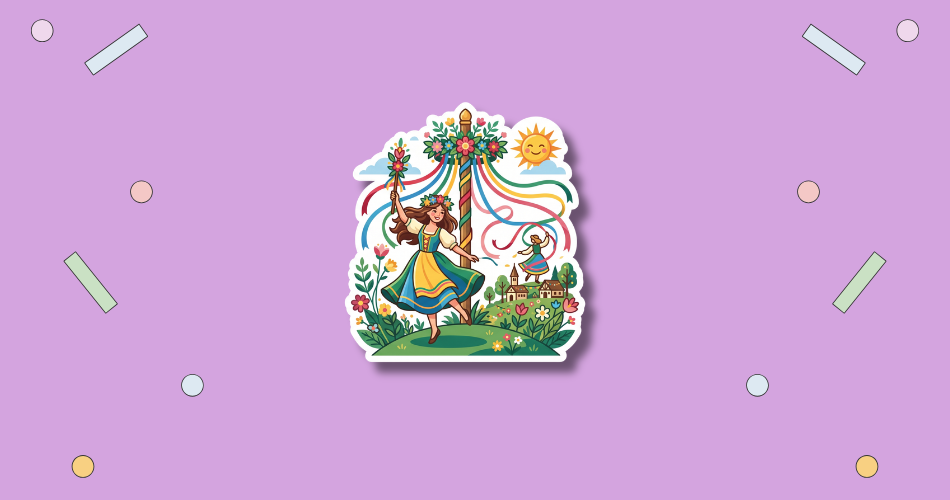
May Day is observed annually on May 1. In 2026, it falls on May 1. This day serves as a dual celebration, marking both the traditional return of spring in the Northern Hemisphere and the global recognition of International Workers’ Day. It is a time for community gatherings, floral tributes, and reflections on the historical struggles for fair labor standards.
See also: International Workers’ Day, EuroMayDay
HT Meter
Does this day matter to you?
Say that it does, and say whether you will be marking it. Both are anonymous to nobody but kind to everybody.
This day matters to me
0 Be the first to say so
Quietly remembered
0 Nobody has said so yet
Notes of remembrance
Join those marking this day to share a word, a memory, or the reason it matters to you.
These notes are kept for the people marking this day. Say you will be marking it to read them and to leave your own.
You have already shared a note here recently.
No notes yet. Yours would be the first.
History of May Day
The earliest origins of May Day date back to the Roman festival of Floralia, which honored Flora, the goddess of flowers. Ancient Celts simultaneously observed Beltane, a fire festival marking the transition from spring to summer. These traditions often involved the lighting of bonfires and the gathering of green branches to symbolize the fertility of the land. During the Middle Ages, many European villages adopted the practice of erecting maypoles—tall wooden beams decorated with ribbons and garlands—as a central point for community dancing and the crowning of a May Queen.

International Workers' Day
In the late 19th century, May Day took on a political significance rooted in the industrial labor movement. In 1884, the Federation of Organized Trade and Labor Unions declared that an eight-hour workday should be the legal standard starting May 1, 1886. This led to massive strikes and protests across the United States, most notably the Haymarket Affair in Chicago. In 1889, the Second International, an organization of socialist and labor parties, formally designated May 1 as International Workers’ Day to commemorate these events and advocate for global labor rights.
Why is May Day important?
May Day is significant because it preserves ancient agricultural rituals while addressing modern social justice. For many, it represents the physical peak of spring, a time when the environment is in full bloom and the planting season is well underway. This connection to nature encourages people to appreciate the changing seasons and participate in outdoor activities that foster community spirit. The day serves as a reminder of the historical relationship between humans and the natural cycles of growth and harvest.
Simultaneously, the holiday serves as a global platform for labor advocacy and solidarity. It honors the sacrifices made by past generations to secure the standard 40-hour work week, safe working conditions, and the right to organize. In many countries, May Day is a public holiday where workers hold rallies to demand fair wages and improved social protections. It provides a specific moment each year to assess the current state of labor rights and the ongoing challenges faced by workers in the modern global economy.
- The day marks the halfway point between the spring equinox and summer solstice.
- It commemorates the 1886 struggle for the implementation of the eight-hour workday.
- Traditional maypole dancing promotes community interaction and local folk history.
- The holiday is officially recognized as a public holiday in over 60 countries.
- It highlights the historical shift from agricultural life to the industrial era.
How to Observe May Day
Make it yours
How would you like to spend May Day?
Tick what fits you, and we will put together ideas made for this day — not for any day.

Early May Bank Holiday
Observing May Day often involves participating in local festivals that feature traditional music and dancing. Many communities still practice “bringing in the May” by gathering wildflowers and creating floral wreaths or crowns to wear throughout the day. In some regions, children make “May baskets”—small containers filled with treats or flowers—and leave them on the doorsteps of neighbors and friends as a gesture of kindness. Dancing around a maypole remains a popular activity in many small towns and schools.
For those focusing on the labor aspect of the holiday, observation may include attending parades or rallies centered on worker rights. Many people use the day to educate themselves on local labor history or to support businesses that practice fair trade and ethical employment standards. It is also a common time for gardening, as the stable spring weather makes it ideal for planting summer crops. Sharing a meal outdoors with colleagues or family members is a simple way to acknowledge the day’s themes of growth and shared effort.
- Decorate a pole with colorful ribbons and perform a traditional weaving dance.
- Hang a basket of flowers on a neighbor’s door to spread spring cheer.
- Attend a local march or rally to show support for fair labor practices.
- Spend time outdoors planting a garden or visiting a botanical park.
- Create a floral crown using seasonal blooms like hawthorn or lily of the valley.
May Day Dates Table
| Year | Date | Day of the week |
|---|---|---|
| 2026 | May 1 | Friday |
| 2027 next | May 1 | Saturday |
| 2028 | May 1 | Monday |
| 2029 | May 1 | Tuesday |
| 2030 | May 1 | Wednesday |