

National American Eagle Day
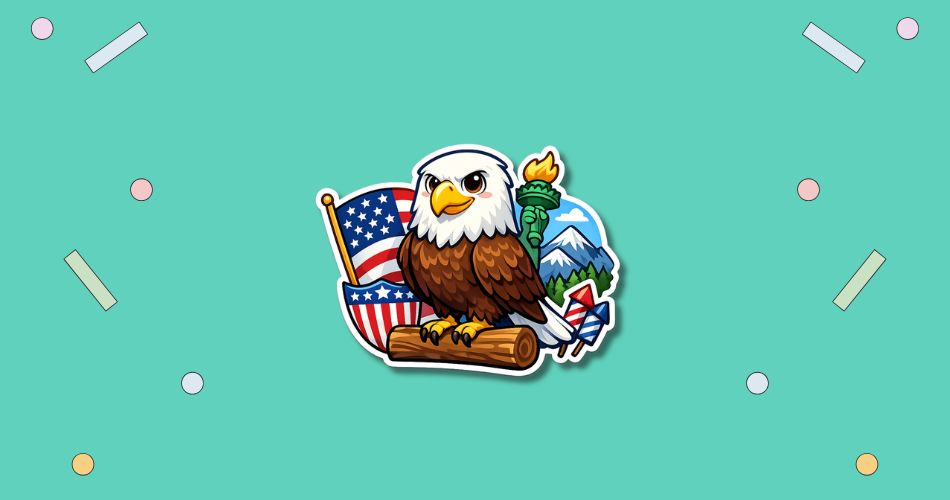
National American Eagle Day is observed every year on June 20. In 2027, this date falls on a Sunday. The observance honors the bald eagle as a national symbol of the United States and draws attention to the bird’s conservation story. It also connects the eagle’s place in American history with practical care for habitats, waterways, nesting areas, and wildlife protections. The day is best approached as an educational observance: patriotic in theme, but also grounded in stewardship. 1 2
Contents
See also: National Save The Eagles Day, International Young Eagles Day, Flag Day
HT Meter
Does this day matter to you?
Say that it does, and say whether you will be marking it. Both are anonymous to nobody but kind to everybody.
This day matters to me
0 Be the first to say so
Quietly remembered
0 Nobody has said so yet
Notes of remembrance
Join those marking this day to share a word, a memory, or the reason it matters to you.
These notes are kept for the people marking this day. Say you will be marking it to read them and to leave your own.
You have already shared a note here recently.
No notes yet. Yours would be the first.
History of National American Eagle Day
The date points back to June 20, 1782, when the Continental Congress approved the design of the Great Seal of the United States. The bald eagle became the central bird on the seal, appearing with a shield, arrows, and an olive branch as part of the young country’s national imagery. National American Eagle Day later grew from efforts to give that symbol its own annual day of recognition. In 1995, at the request of the American Eagle Foundation, President Bill Clinton and Tennessee Governor Don Sundquist proclaimed the first American Eagle Day.
National Save The Eagles Day
The observance now links American symbolism with the bald eagle’s recovery from a serious population decline. Bald eagles suffered from habitat loss, illegal killing, and the effects of DDT and related pesticides, which damaged reproduction. By the 1960s, the species was in danger in much of the lower 48 states, but legal protections, pesticide restrictions, nest protection, and conservation work helped the population rebound. National American Eagle Day keeps that recovery in view while reminding people that eagles still depend on clean water, safe nesting habitat, and responsible human behavior.
Why is National American Eagle Day important?
National American Eagle Day matters because the bald eagle is more than a familiar image on seals, documents, coins, and public buildings. It is a living bird whose survival was not guaranteed during the twentieth century. The day helps connect patriotic symbols with real wildlife, real landscapes, and real conservation choices. It also makes a familiar national emblem easier to understand as a species with habitat needs, breeding behavior, and legal protections.
The observance also gives schools, families, parks, museums, and conservation groups a useful teaching moment. It can introduce children to the Great Seal, the history of the national symbol, and the difference between honoring an animal symbolically and protecting it in practice. The bald eagle’s recovery is often described as a conservation success story, but success does not mean neglect is harmless. Fishing line, lead, trash, habitat disturbance, and pollution can still put eagles and other raptors at risk.
- It connects American history with wildlife education.
- It highlights one of the country’s most recognizable symbols.
- It keeps attention on clean habitats and waterways.
- It shows how conservation laws can make a measurable difference.
- It gives families and classrooms a clear topic for civic learning.
How to Observe National American Eagle Day
Make it yours
How would you like to spend National American Eagle Day?
Tick what fits you, and we will put together ideas made for this day — not for any day.
Bird Day
Learn the story behind the bald eagle on the Great Seal, then connect that history with the bird’s life in the wild. A visit to a wildlife refuge, nature center, river overlook, or local park can make the day more concrete, especially in areas where bald eagles nest or migrate. Keep a respectful distance from nests and perched birds, and use binoculars instead of trying to get close. Reading about eagle protections is also useful, because many well-meaning people do not realize that nests, feathers, eggs, and birds are protected by federal law.
The day can also be used for small conservation actions. Pick up fishing line or trash near a shoreline, support a licensed wildlife rehabilitation organization, or share accurate information about eagle safety. Teachers can pair the day with lessons on the Great Seal, the Endangered Species Act, food chains, river ecosystems, or responsible outdoor recreation. Families can keep the observance simple by watching eagles from a distance, studying a field guide, or talking about why symbols are stronger when the living things behind them are respected.
- Visit a wildlife refuge or nature center.
- Watch for eagles with binoculars from a safe distance.
- Remove litter from a shoreline or park.
- Read about the Great Seal of the United States.
- Support a reputable raptor rescue or conservation group.
National American Eagle Day Dates
| Year | Date | Day of the week |
|---|---|---|
| 2026 | June 20 | Saturday |
| 2027 next | June 20 | Sunday |
| 2028 | June 20 | Tuesday |
| 2029 | June 20 | Wednesday |
| 2030 | June 20 | Thursday |