


National Day of Ethiopia
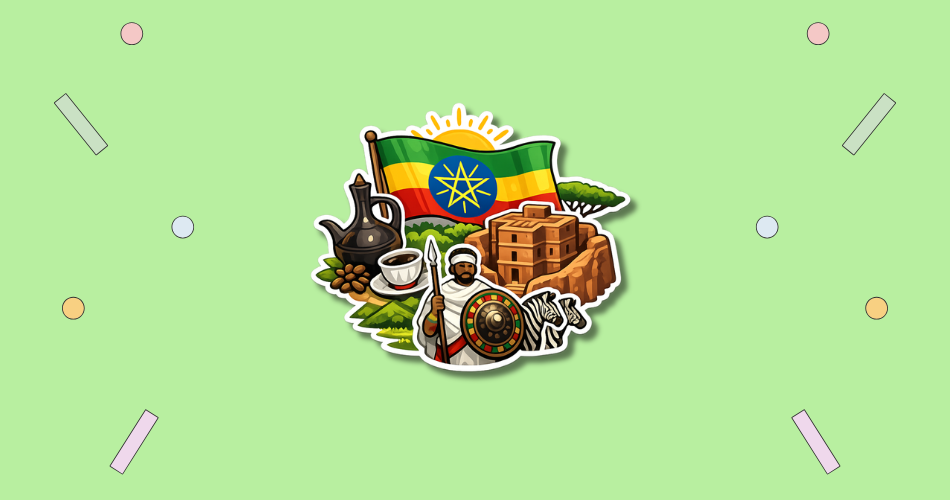
National Day of Ethiopia is observed every year on May 28. In 2027, this date falls on a Friday. The day is closely connected with the fall of the Derg military regime in 1991, a major turning point in Ethiopia’s modern political history. It is also widely known as Derg Downfall Day, and its tone is more reflective than festive. The observance gives Ethiopians and people of Ethiopian heritage a date to remember a difficult era, honor those affected by conflict and repression, and think about the country’s path since that transition.
Contents
See also: African Liberation Day, Independence Day in Eritrea
HT Meter
Does this day matter to you?
Say that it does, and say whether you will be marking it. Both are anonymous to nobody but kind to everybody.
This day matters to me
0 Be the first to say so
Quietly remembered
0 Nobody has said so yet
Notes of remembrance
Join those marking this day to share a word, a memory, or the reason it matters to you.
These notes are kept for the people marking this day. Say you will be marking it to read them and to leave your own.
You have already shared a note here recently.
No notes yet. Yours would be the first.
History of National Day of Ethiopia
The background of National Day of Ethiopia reaches back to 1974, when Emperor Haile Selassie was overthrown and the Derg, a military committee, took control of the country. The Derg later established a Marxist-Leninist government and ruled Ethiopia during years marked by political repression, civil war, economic hardship, and famine. Opposition to the regime grew over time, and rebel forces led by the Ethiopian People’s Revolutionary Democratic Front advanced on Addis Ababa in 1991. On May 28 of that year, the Derg regime collapsed, making the date one of the most important markers in Ethiopia’s late 20th-century history.
Independence Day in Eritrea
The day is not an independence day in the usual colonial sense, since Ethiopia’s national story differs from many other African countries. Ethiopia is often noted for maintaining its sovereignty through most of the colonial era, even though it experienced Italian occupation from 1936 to 1941. National Day instead points to an internal political transition after years of military rule. Today, the date is understood through history, remembrance, national identity, and continuing discussion about Ethiopia’s political development.
Why is National Day of Ethiopia important?
National Day of Ethiopia matters because it marks the end of a period that deeply affected families, communities, and the direction of the state. The Derg era was tied to conflict, fear, displacement, and loss, so the date carries a seriousness that goes beyond a simple national celebration. For many people, May 28 represents survival and the hope that followed the end of military rule. It also gives younger generations a clear historical point from which to learn about the events that shaped modern Ethiopia.
The day also reflects the complexity of national memory. A country’s political turning points are rarely understood in only one way, and Ethiopia’s modern history continues to be discussed with strong feelings and different perspectives. National Day can therefore be a moment for careful learning rather than easy slogans. It invites attention to the cost of authoritarian rule, the importance of peace, and the long work of building institutions after conflict.
- It marks a major turning point in modern Ethiopian history.
- It keeps attention on the human cost of the Derg era.
- It helps younger people learn about the events of 1991.
- It connects national identity with reflection and remembrance.
- It encourages thoughtful discussion about peace and civic life.
How to Observe National Day of Ethiopia
Make it yours
How would you like to spend National Day of Ethiopia?
Tick what fits you, and we will put together ideas made for this day — not for any day.
African Liberation Day
Read a clear account of Ethiopia’s modern history, especially the period from the 1974 revolution through the fall of the Derg in 1991. Families may use the day to talk about personal memories, migration stories, or the experiences of relatives who lived through that time. Ethiopian communities abroad may attend formal gatherings, cultural programs, or diplomatic events connected with the date. A respectful observance should keep the focus on history, remembrance, and the lives affected by political violence and civil war.
The day can also be observed through Ethiopian culture in a careful and grounded way. Listening to Ethiopian music, learning about the country’s languages and regions, or sharing food such as injera with family can create space for connection without ignoring the seriousness of the date. Students and educators can use May 28 to discuss how nations remember difficult political change. Community groups can pair cultural pride with historical education, especially for people who know Ethiopia mainly through headlines or brief summaries.
- Read about the Derg period and the events of 1991.
- Talk with elders about family memories connected to Ethiopia.
- Attend a respectful Ethiopian community or cultural event.
- Learn about Addis Ababa and its role in the 1991 transition.
- Share Ethiopian food while discussing the country’s history.
National Day of Ethiopia Dates
| Year | Date | Day of the week |
|---|---|---|
| 2026 | May 28 | Thursday |
| 2027 next | May 28 | Friday |
| 2028 | May 28 | Sunday |
| 2029 | May 28 | Monday |
| 2030 | May 28 | Tuesday |