


National Weather Observers Day
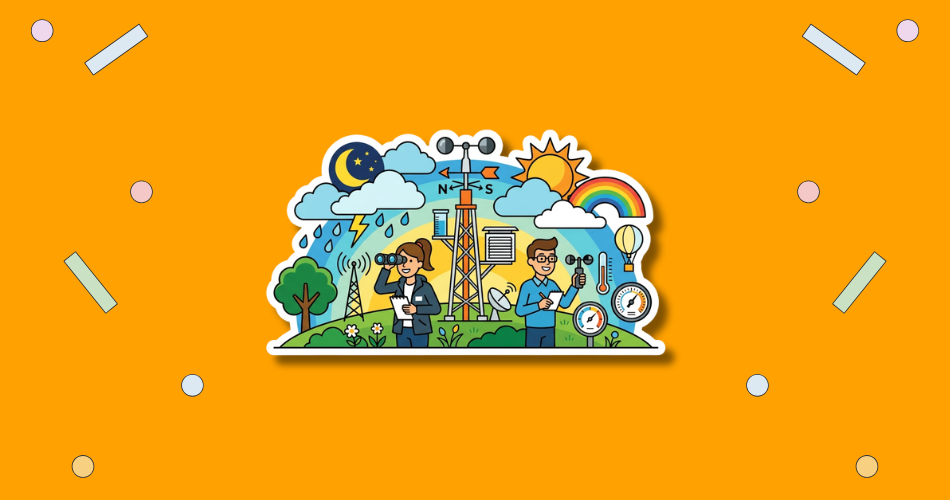
National Weather Observers Day is observed on May 4. This day honors the thousands of dedicated individuals who track atmospheric conditions and provide essential data to meteorologists. These observers, ranging from hobbyists with backyard sensors to trained storm spotters, ensure that weather forecasts remain accurate and that communities receive timely warnings during severe events. In 2027, this date falls on a Tuesday. Their work provides a vital human element to the high-tech world of modern meteorology.
Contents
See also: National Weatherperson’s Day, National Look Up at the Sky Day, Observe the Weather Day, World Meteorological Day
HT Meter
Does this day matter to you?
Say that it does, and say whether you will be marking it. Both are anonymous to nobody but kind to everybody.
This day matters to me
0 Be the first to say so
Quietly remembered
0 Nobody has said so yet
Notes of remembrance
Join those marking this day to share a word, a memory, or the reason it matters to you.
These notes are kept for the people marking this day. Say you will be marking it to read them and to leave your own.
You have already shared a note here recently.
No notes yet. Yours would be the first.
History of National Weather Observers Day
The holiday was founded in 1989 by Alan Brue, who was then a senior psychology major at the State University of New York. Brue established the day to recognize the efforts of weather enthusiasts and professionals who spend their time monitoring the skies. While the holiday is relatively modern, it celebrates a tradition of data collection that dates back to the early American republic. Figures like Thomas Jefferson and James Madison kept meticulous daily weather diaries to study the climate of the new nation.

National Weatherperson's Day
The formalization of these observations began in the late 19th century with the creation of the Weather Bureau, which later became the National Weather Service. Programs like the Cooperative Observer Program and SKYWARN were developed to recruit volunteers to provide ground-level reports that satellites and radar cannot always capture. National Weather Observers Day serves as an annual reminder of how these individual contributions have built the comprehensive historical weather records used by scientists today.
Why is National Weather Observers Day important?
Ground-level observations provide the confirmation necessary to verify radar images and satellite data. While technology has advanced significantly, sensors can sometimes misinterpret what is happening at the surface due to terrain or distance. Observers who report actual snowfall totals, hail sizes, or wind damage provide the confirmation meteorologists need to refine their forecasts and issue life-saving alerts. This verification process is a cornerstone of public safety during unpredictable weather patterns.
Long-term records collected by these observers are also essential for understanding regional climate trends. Many volunteers maintain the same weather station for decades, creating a consistent data set that shows how local temperatures and precipitation patterns change over time. This information is used by urban planners, farmers, and government agencies to prepare for future environmental challenges. By acknowledging these contributors, the day highlights the critical role of citizen science in protecting infrastructure.
- Volunteers help meteorologists confirm radar data with real-world reports
- Detailed records assist in long-term climate and environmental research
- Ground observers provide essential information for local agricultural planning
- Storm spotters save lives by reporting severe conditions in real time
- The day promotes the growth of citizen science across the country
How to Observe National Weather Observers Day
Make it yours
How would you like to spend National Weather Observers Day?
Tick what fits you, and we will put together ideas made for this day — not for any day.
Observe the Weather Day
A practical way to celebrate is by enrolling in a weather spotter training course offered by organizations like SKYWARN. These free classes teach participants how to identify significant cloud formations, estimate wind speeds, and report severe weather safely to the National Weather Service. Becoming a certified observer allows you to contribute directly to the safety of your local community while deepening your understanding of how the atmosphere works.
Setting up a personal weather station at home is another popular way to participate. Modern digital stations can track temperature, humidity, and barometric pressure, with some models allowing users to share their data online through global networks. For a simpler approach, families can keep a basic weather journal or use a rain gauge to track local precipitation. Sharing your findings or simply thanking a local meteorologist on social media helps raise awareness for the importance of constant vigilance in weather monitoring.
- Enroll in a free SKYWARN storm spotter training session
- Install a backyard rain gauge or a digital weather station
- Start a daily log to track local temperature and cloud types
- Follow your local weather office for updates and educational tips
- Post a message of appreciation for volunteer weather observers online
National Weather Observers Day Dates Table
| Year | Date | Day of the week |
|---|---|---|
| 2026 | May 4 | Monday |
| 2027 next | May 4 | Tuesday |
| 2028 | May 4 | Thursday |
| 2029 | May 4 | Friday |
| 2030 | May 4 | Saturday |