
Spanish Language Day
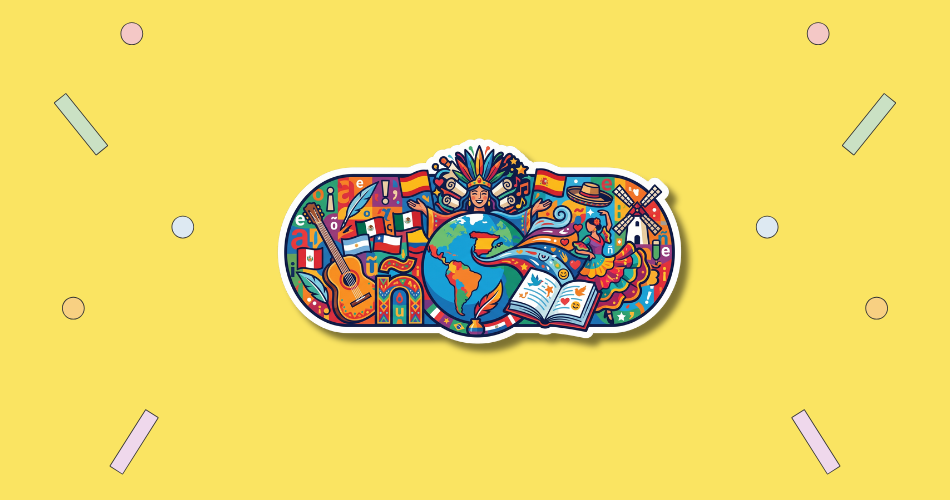
Spanish Language Day (Día del Idioma Español) is observed annually on April 23. In 2027, this date falls on a Friday. Established by the United Nations, the day celebrates the history, culture, and use of Spanish as one of the world’s most influential languages. It coincides with the anniversary of the death of Miguel de Cervantes, the author of Don Quixote. 1
Contents
See also: Chinese Language Day, French Language Day, International Mother Language Day, World Arabic Language Day, World Portuguese Language Day, Day of the Finnish Language
HT Meter
Does this day matter to you?
Tap the meter if it does, and say whether you will be celebrating — that is what opens the wishes from everybody else who will be.
This day matters to me
0 Be the first to say so
Just getting started
0 Let others know you’re in.
Wishes, greetings and stories
Join the celebration to share a wish, a greeting, or how this day goes in your house.
These are kept for the people celebrating this day. Say you will be celebrating to read them and to add your own.
You have already shared something here recently.
Nothing here yet. Yours would be the first.
History of Spanish Language Day
The holiday was originally created in 1926 by Spanish writer Vicente Clavel Andrés to honor Miguel de Cervantes. Initially celebrated in Spain, the concept was adopted by the United Nations in 2010 as part of its initiative to promote multilingualism and celebrate the six official languages of the UN.
Spain Hispanic Day
The choice of April 23 is highly symbolic. Miguel de Cervantes, widely considered the greatest writer in the Spanish language and one of the world’s preeminent novelists, died on this date in 1616. His masterpiece, Don Quixote, is often cited as the first modern novel and has had a profound impact on Western literature. By linking the language to Cervantes, the holiday emphasizes the deep literary roots and artistic complexity of Spanish.
Why is Spanish Language Day important?
The day highlights the immense global reach of the Spanish language. With over 500 million native speakers, Spanish is the second most spoken language in the world by native population. It serves as the official language in 21 countries across Europe, Africa, and the Americas. Because of its wide geographic distribution, Spanish acts as a vital bridge for international diplomacy, global trade, and cultural exchange.
Culturally, the holiday celebrates the diversity of “Hispanidad.” While the language shares a common grammar, the regional dialects, slangs, and accents of Mexico, Spain, Argentina, and beyond create a rich tapestry of human expression. Observing this day encourages the protection of linguistic diversity and promotes the study of Spanish as a second language, which remains one of the most popular educational choices for students worldwide.
- Spanish is the official language of 21 sovereign nations.
- It is the most studied second language in the United States.
- The holiday promotes the UN’s goal of “parity” among its official working languages.
- Cervantes’ Don Quixote is the most translated book after the Bible.
- The day honors the “Real Academia Española” (RAE), the institution that regulates the language.
How to Celebrate Spanish Language Day
Make it yours
How would you like to spend Spanish Language Day?
Tick what fits you, and we will put together ideas made for this day — not for any day.

International English Language Day
A primary way to observe the day is by engaging with Spanish literature. Reading a few chapters of Don Quixote or exploring the works of modern giants like Gabriel García Márquez, Isabel Allende, or Jorge Luis Borges provides insight into the language’s power. Many schools and cultural centers host “Lecturas continuadas” (continuous readings) where people take turns reading Cervantes’ work aloud for 48 hours straight.
For language learners, the day is an excellent opportunity to practice conversational skills or learn new vocabulary specific to a particular Spanish-speaking region. Watching a Spanish-language film with subtitles or listening to a podcast about Hispanic history can deepen one’s appreciation for the culture. Many people also celebrate through “Turismo de lengua,” visiting Hispanic neighborhoods or attending festivals that showcase traditional music like Flamenco, Mariachi, or Tango.
- Read a poem by Pablo Neruda or Federico García Lorca.
- Start a new lesson on a language app like Duolingo or Babbel.
- Cook a traditional dish from a Spanish-speaking country, such as paella or empanadas.
- Watch a celebrated Spanish-language film, such as Pan’s Labyrinth or Roma.
- Share your favorite Spanish word or a motivational quote on social media.
Spanish Language Day Dates Table
| Year | Date | Day of the week |
|---|---|---|
| 2026 | April 23 | Thursday |
| 2027 next | April 23 | Friday |
| 2028 | April 23 | Sunday |
| 2029 | April 23 | Monday |
| 2030 | April 23 | Tuesday |