


Vanuatu Independence Day
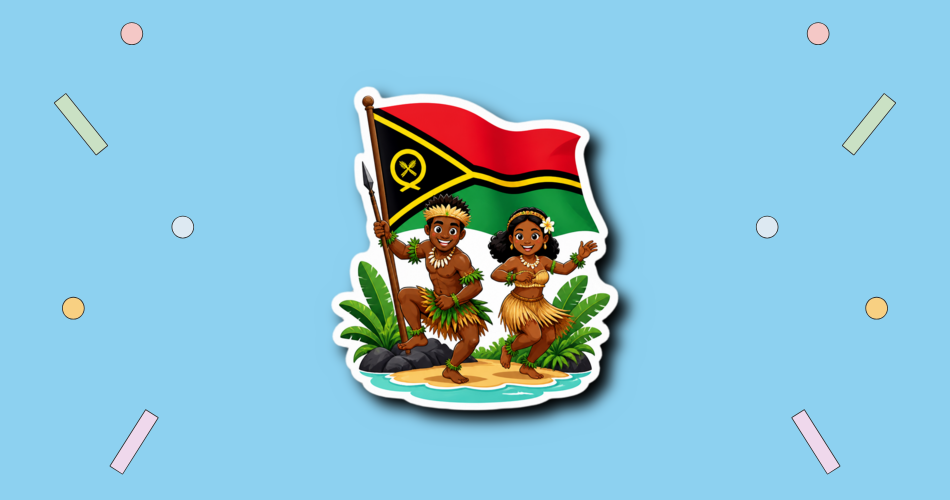
Vanuatu Independence Day is celebrated annually on July 30. In 2027, this date falls on a Friday. This national holiday marks the Republic of Vanuatu's liberation from the joint colonial rule of the United Kingdom and France, which ended on July 30, 1980. It is a day of pride, reflection, and vibrant cultural expression across the archipelago.
Contents
HT Meter
Does this day matter to you?
Tap the meter if it does, and say whether you will be celebrating — that is what opens the wishes from everybody else who will be.
This day matters to me
0 Be the first to say so
Just getting started
0 Let others know you’re in.
Wishes, greetings and stories
Join the celebration to share a wish, a greeting, or how this day goes in your house.
These are kept for the people celebrating this day. Say you will be celebrating to read them and to add your own.
You have already shared something here recently.
Nothing here yet. Yours would be the first.
History of Vanuatu Independence Day
European contact with the islands began in July 1774 when British explorer Captain James Cook arrived and named them the New Hebrides. Over the following decades, Protestant and Roman Catholic missionaries arrived, followed by British and French settlers who established plantations for cotton, coffee, cocoa, bananas, and coconuts. By 1906, the French population outnumbered the British, and the two colonial powers formalized their control through the Anglo-French Condominium, a unique arrangement that maintained separate legal, governmental, judicial, and financial systems. Native Vanuatu citizens were denied citizenship in either country and faced labor exploitation under colonial rule.
During the 1970s, indigenous political movements and parties emerged, demanding independence. After several unsuccessful elections, a compromise was brokered between the colonial powers and native representatives. Independence was scheduled for July 30, 1980, and elections were held between the two major parties. On that day, the New Hebrides became the Republic of Vanuatu, with a new government led by Prime Minister Walter Lini. The name Vanuatu combines local words meaning 'home' and 'stand,' symbolizing the nation's sovereignty and self-determination.
Why is Vanuatu Independence Day important?
This holiday celebrates the fundamental right of the people of Vanuatu to self-government and sovereignty. It acknowledges the struggles and sacrifices made during the independence movement, honoring those who fought tirelessly for freedom. The day also serves as a reminder of the lessons of history, encouraging reflection on the colonial past and the importance of national unity.
- It celebrates independence and the right to self-determination.
- It honors independence heroes like Prime Minister Walter Lini.
- It provides an opportunity to reflect on Vanuatu's history and cultural heritage.
- It strengthens national pride and unity among the diverse islands.
- It recognizes the linguistic and cultural richness of Vanuatu, home to over 100 indigenous languages.
How to Celebrate Vanuatu Independence Day
Make it yours
How would you like to spend Vanuatu Independence Day?
Tick what fits you, and we will put together ideas made for this day — not for any day.
Vanuatu Constitution Day
Celebrations across Vanuatu include official ceremonies, parades, traditional 'kastom' dances, sports competitions, and community feasts featuring local delicacies. The largest festivities take place in the capital, Port Vila, where people gather to showcase their vibrant culture. Individuals can participate by posting the Vanuatu flag on social media, wishing the people a happy Independence Day, and learning about the country's unique traditions, such as the Prince Philip Movement or the active volcano Mount Yasur.
To deepen appreciation, study the culture of Vanuatu, including its lifestyle, dressing, food, and history. Learn a word in Bislama, one of the three official languages, such as how to say 'good morning' or 'goodbye.' Supporting local artisans and businesses, either in Vanuatu or through online marketplaces that promote Pacific island crafts, is another meaningful way to celebrate.
Vanuatu Independence Day Dates
| Year | Date | Day of the week |
|---|---|---|
| 2026 | July 30 | Thursday |
| 2027 next | July 30 | Friday |
| 2028 | July 30 | Sunday |
| 2029 | July 30 | Monday |
| 2030 | July 30 | Tuesday |
Thank you for your feedback!
Saint Vincent and the Grenadines Independence Day
Fuel the next post!
Sorry to hear you didn't enjoy this article...
Help us make it better!