



World Camel Day
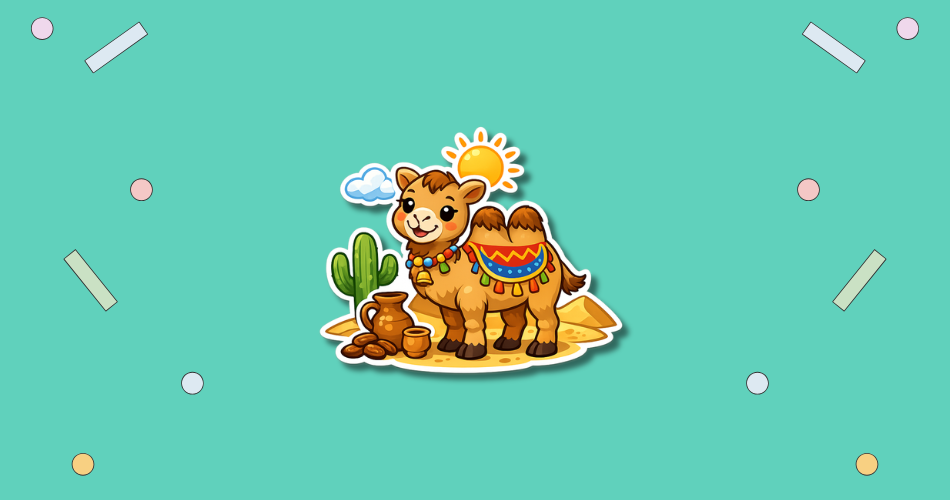
World Camel Day is observed every year on June 22. In 2027, this date falls on a Tuesday. The day recognizes camels as resilient animals with deep value in dryland communities, pastoral livelihoods, food security, and cultural heritage. It is especially connected with the people who raise, study, depend on, and care for camels in arid and semi-arid regions. The observance also gives educators, animal organizations, farms, and families a reason to learn more about dromedaries, Bactrian camels, and the communities that have worked with them for generations. 1
Contents
See also: National Horse Day, World Donkey Day
HT Meter
Does this day matter to you?
Tap the meter if it does, and say whether you will be celebrating — that is what opens the wishes from everybody else who will be.
This day matters to me
0 Be the first to say so
Just getting started
0 Let others know you’re in.
Wishes, greetings and stories
Join the celebration to share a wish, a greeting, or how this day goes in your house.
These are kept for the people celebrating this day. Say you will be celebrating to read them and to add your own.
You have already shared something here recently.
Nothing here yet. Yours would be the first.
History of World Camel Day
World Camel Day was founded in 2009 by Dr. Abdul Raziq Kakar, a Pakistani camel scientist and advocate. The idea grew from efforts to bring more attention to camels, camel keepers, and the role of these animals in places where heat, drought, and limited grazing make other livestock harder to support. The date, June 22, was selected because it falls immediately after the long, hot period around the summer solstice in the Northern Hemisphere. That timing connects the day with the camel’s well-known ability to survive and work in harsh desert and dryland conditions.

World Donkey Day
The observance now focuses on more than the animal itself. Camels provide milk, meat, fiber, transport, income, and cultural identity in many parts of Africa, Asia, the Middle East, and other camel-rearing regions. Broader attention to camelids has also grown through international education about dromedaries, Bactrian camels, wild camels, llamas, alpacas, vicuñas, and guanacos. World Camel Day fits into that larger conversation by keeping the focus on camels, their welfare, and the people whose livelihoods are closely tied to them.
Why is World Camel Day important?
World Camel Day matters because camels are practical, productive animals in some of the world’s most difficult environments. They can travel long distances, withstand heat, and continue providing value where water and pasture may be scarce. For many pastoral and dryland communities, camels are not exotic animals but working partners, sources of nutrition, and economic assets. Giving them attention helps highlight animal health, veterinary care, responsible breeding, and the needs of the families who rely on them.
The day also has educational value. Camels are useful for teaching children and adults about adaptation, ecology, agriculture, and culture without turning the lesson into a simple desert stereotype. Their humps store fat rather than water, their bodies are suited to extreme conditions, and their role in human societies stretches across trade, travel, food, textiles, and ceremony. Learning about camels can lead to a better understanding of climate resilience, dryland farming, and the knowledge held by herders and local communities.
- Camels support livelihoods in dry and desert regions.
- The day brings attention to camel health and welfare.
- Camel milk, meat, and fiber remain important resources.
- Students can learn about animal adaptation and dryland life.
- Herders and pastoral communities receive needed recognition.
How to Celebrate World Camel Day
Make it yours
How would you like to spend World Camel Day?
Tick what fits you, and we will put together ideas made for this day — not for any day.

World Animal Day
Learn one accurate fact about camels and share it with someone who only knows them as desert animals. Read about the differences between dromedary and Bactrian camels, or look up how camel keepers manage herds in hot and dry climates. Families can visit a reputable farm, zoo, sanctuary, or educational program that cares for camels and explains their behavior responsibly. Teachers can use the day for lessons about deserts, animal adaptation, food systems, and the cultures connected with camel herding.
Community groups, farms, and animal organizations can mark the day with talks, demonstrations, children’s activities, or displays about camel products and traditional uses. In camel-rearing regions, events may include exhibitions, races, herder meetings, veterinary outreach, or discussions about camel husbandry and rural livelihoods. A thoughtful celebration should keep the animal’s welfare at the center and avoid treating camels only as photo props. The best activities help people understand why camels remain valuable, not only why they are unusual.
- Read about dromedary and Bactrian camels.
- Visit a responsible camel farm or animal center.
- Teach children how camels survive extreme heat.
- Support programs that improve camel veterinary care.
- Share photos or facts that respect camel-keeping cultures.
World Camel Day Dates
| Year | Date | Day of the week |
|---|---|---|
| 2026 | June 22 | Monday |
| 2027 next | June 22 | Tuesday |
| 2028 | June 22 | Thursday |
| 2029 | June 22 | Friday |
| 2030 | June 22 | Saturday |
Thank you for your feedback!

World Day to Combat Desertification and Drought
Fuel the next post!