



World Rhino Day

Every year on September 22, World Rhino Day rallies people, zoos, and conservation groups around the world to celebrate rhinos and raise awareness about the threats they face. 1
Contents
HT Meter
Does this day matter to you?
Say that it does, and say whether you will be marking it. Both are anonymous to nobody but kind to everybody.
This day matters to me
0 Be the first to say so
Quietly remembered
0 Nobody has said so yet
Notes of remembrance
Join those marking this day to share a word, a memory, or the reason it matters to you.
These notes are kept for the people marking this day. Say you will be marking it to read them and to leave your own.
You have already shared a note here recently.
No notes yet. Yours would be the first.
History of World Rhino Day
World Rhino Day was first announced by WWF–South Africa in 2010 as a way to focus global attention on rhino conservation and give organizations a common moment to act.
The following year it grew into a worldwide observance supported by NGOs, sanctuaries, and partners that host events, fundraisers, and education campaigns—momentum that has continued each September 22.
Why is World Rhino Day important?
Rhinos are ancient survivors, yet four of the five living species are threatened, with fewer than about 27,000 rhinos remaining across Africa and Asia—a sober snapshot that turns this observance into a practical reminder to help protect them. 2
Save The Rhino Day
The day also connects people to real solutions: from strengthening anti-poaching efforts to restoring habitats and supporting community-led conservation, it’s a chance to turn admiration for these animals into action that keeps them on the landscape.
- It shines a light on species that still need urgent help.
- It turns admiration into donations, volunteering, and advocacy.
- It keeps accurate information moving faster than myths.
- It builds a yearly habit of caring, not just a one-off post.
- It honors rangers and community partners doing the hard work.
Interesting facts about rhinos
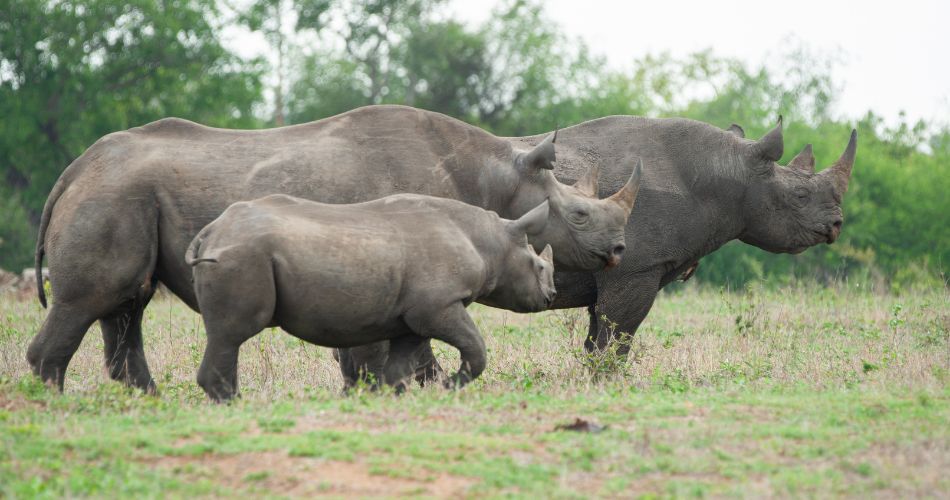
- There are five living rhino species: white and black (Africa), and greater one-horned, Javan, and Sumatran (Asia). Javan and greater one-horned have a single horn; white, black, and Sumatran have two. 3
- A major 7-year study found that dehorning—carefully removing horns under anesthesia—reduced poaching by about 78% across South African reserves. Horns regrow, so dehorning is repeated roughly every 18 months.
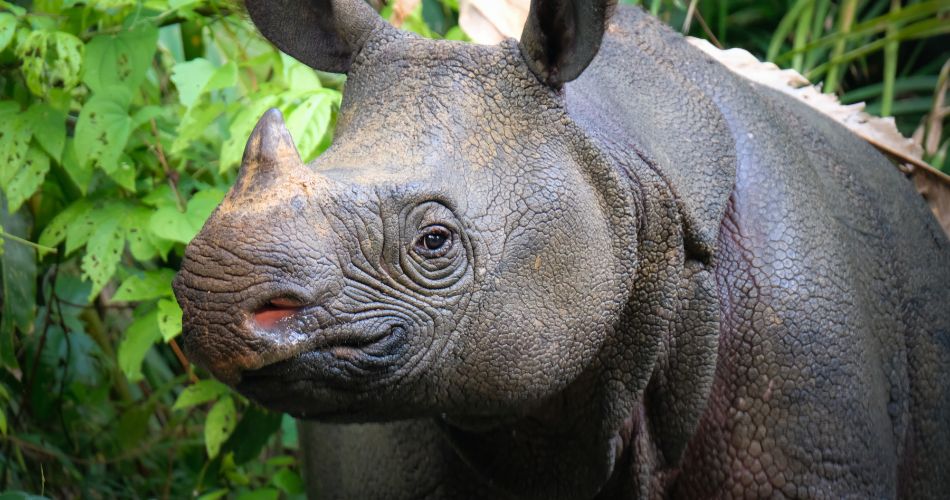
- Rhino horns aren’t bone or ivory—they’re tightly packed keratin (the same protein as hair and fingernails). If a horn breaks, it can regrow. 3
- Rhinos use communal dung piles, called middens, like scent “bulletin boards,” leaving chemical cues about sex, age, and reproductive status. 2
- Oxpecker birds act like living alarm systems: experiments showed rhinos with oxpeckers detected approaching humans 100% of the time and at much greater distances.
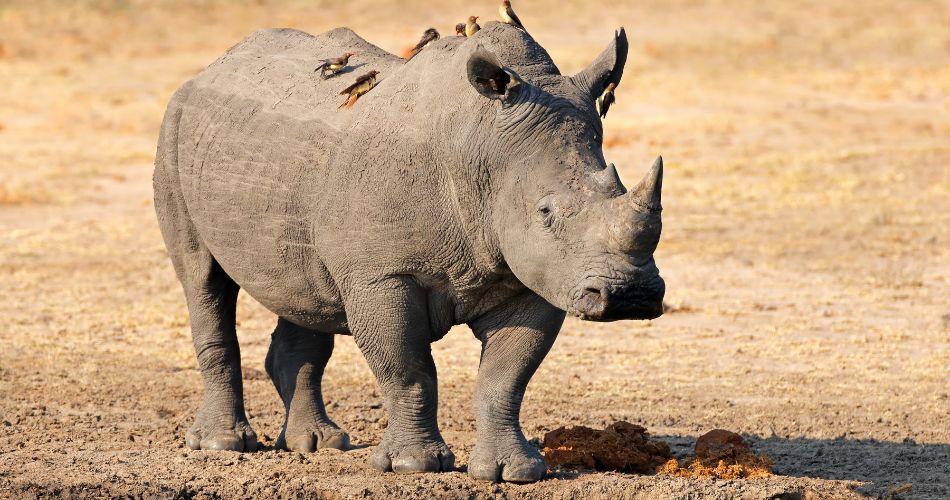
- Despite their size, rhinos can sprint—black rhinos have been clocked around 40 mph (64 km/h). 3
- Gestation is among the longest for land mammals: a rhino pregnancy lasts about 15–16 months, and mothers typically have one calf at a time.
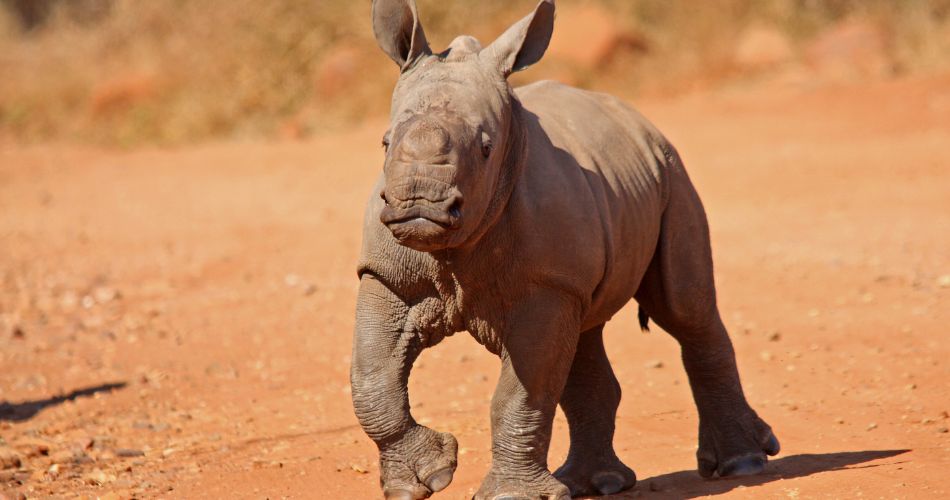
- Only two northern white rhinos remain alive—both females (Najin and Fatu) under guard in Kenya—so scientists are pursuing IVF and embryo transfers using southern white rhino surrogates.
- The popular story that “white” rhino comes from the Afrikaans/Dutch word for “wide” (referring to its mouth) is widely repeated, but historical scholarship notes there’s no firm written evidence—it may simply be an old misunderstanding.
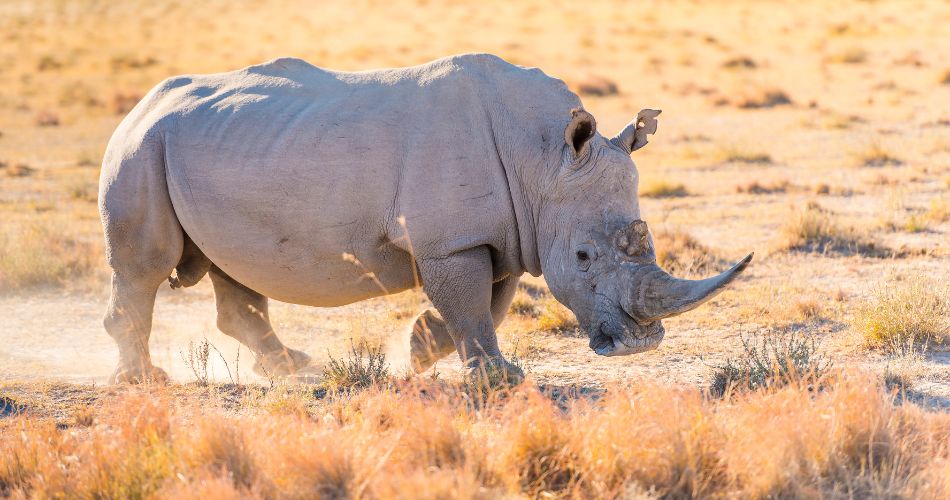
- Rhinos are odd-toed ungulates (perissodactyls) and walk on three toes, their closest living relatives are horses and tapirs. 4
- Mud wallows are essential “skincare”: the coating cools rhinos and protects against sun and biting insects.
- Asian rhinos (greater one-horned and Sumatran) have tusk-like lower incisors used in fights, African rhinos lack these tusks and rely on their horns.
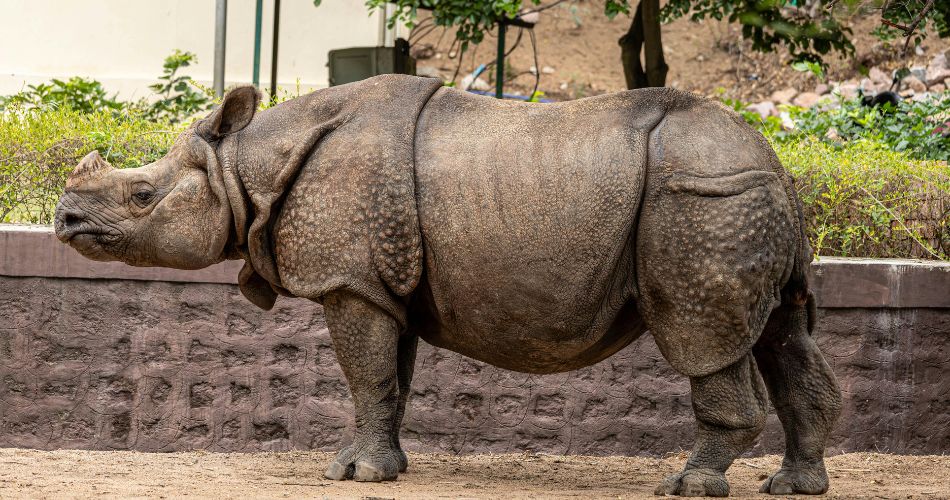
- Global numbers vary by species and region, a recent round-up estimates roughly 26,700 rhinos worldwide, with black rhinos trending upward (~6,788) and greater one-horned rhinos topping 4,000, while Sumatran (≈34–47) and Javan (~50) remain dangerously low.
- International commercial trade in rhino horn has been banned under CITES since 1977 (with limited exceptions that don’t legalize horn commerce).
How to observe World Rhino Day
Make it yours
How would you like to spend World Rhino Day?
Tick what fits you, and we will put together ideas made for this day — not for any day.
Keep it simple and useful. Read a short primer on the five rhino species, then share one credible fact with a link to a reputable conservation group. If you can, make a small donation or set up a recurring one; steady support helps field teams plan with confidence.
Make it social without pressure. Host a low-key watch-and-learn evening with a quick talk or video about rhinos, add a tip jar for a trusted nonprofit, and encourage friends to follow organizations that post field updates year-round. If you travel, choose wildlife experiences that prioritize animal welfare and support local conservation.
- Share one verified rhino fact and tag a conservation group.
- Give what you can and set a reminder to revisit next month.
- Choose tourism that clearly supports rhino protection.
- Learn the five species and where they live.
- Add September 22 to your calendar so it becomes a tradition.
Rhino Quiz ❓️
World Rhino Day Dates Table
| Year | Date | Day |
|---|---|---|
| 2026 | September 22 | Tuesday |
| 2027 | September 22 | Wednesday |
| 2028 | September 22 | Friday |
| 2029 | September 22 | Saturday |
| 2030 | September 22 | Sunday |

Sorry to hear you didn't enjoy this article...

World Gorilla Day
Help us make it better!