

Boston Marathon

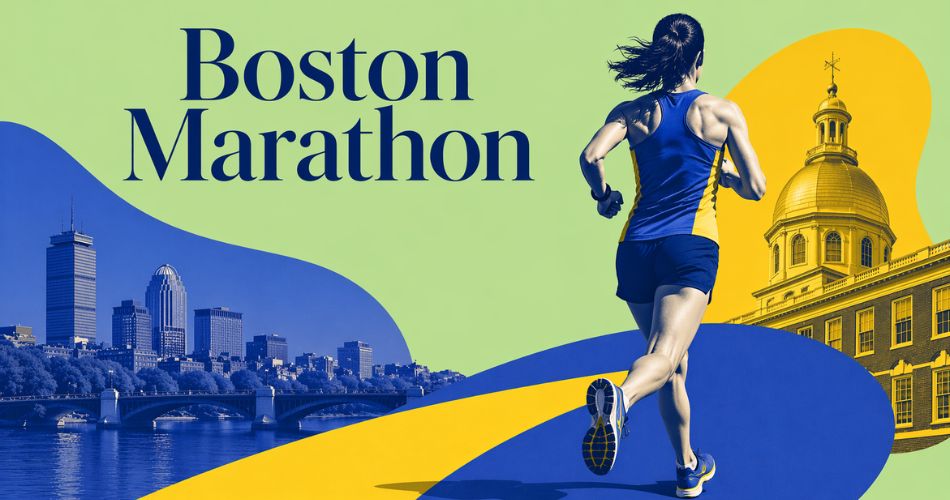
The Boston Marathon is traditionally observed on the third Monday of April. In 2026, it falls on April 20. This athletic competition stands as the world’s oldest annual marathon and serves as a major milestone for distance runners globally. Thousands of participants converge in Massachusetts to navigate the historic course from the town of Hopkinton to the center of Boston.
Contents
Read also: One Boston Day and National Boston Day
HT Meter
Does this day matter to you?
Say that it does, and say whether you will be marking it. Both are anonymous to nobody but kind to everybody.
This day matters to me
0 Be the first to say so
Quietly remembered
0 Nobody has said so yet
Notes of remembrance
Join those marking this day to share a word, a memory, or the reason it matters to you.
These notes are kept for the people marking this day. Say you will be marking it to read them and to leave your own.
You have already shared a note here recently.
No notes yet. Yours would be the first.
History of Boston Marathon
The inaugural event took place on April 19, 1897, featuring a small field of 15 runners who competed over a 24.5-mile course. John Graham, the manager of the first U.S. Olympic team, collaborated with the Boston Athletic Association to establish the race after being inspired by the marathon at the 1896 Athens Games. The race was originally designed to link the Athenian struggle for liberty with the American Revolution, starting in Ashland and ending at the Irvington Oval in Boston.
Interesting facts about the Boston Marathon
The race underwent significant changes over the years to meet international athletic standards. In 1924, the starting line moved to Hopkinton to extend the distance to the official Olympic length of 26.2 miles. While the race was limited to men for many decades, women began to challenge these restrictions in the 1960s. Roberta Gibb and Kathrine Switzer became famous for completing the course before women were officially allowed to register in 1972. In 1975, the Boston Marathon became the first major marathon to include a competitive wheelchair division.
Boston Marathon Bombing
The Boston Marathon bombing was a domestic terrorist attack that occurred on April 15, 2013, when two pressure-cooker bombs exploded near the finish line of the historic race on Boylston Street. The blasts killed three spectators—Krystle Campbell, Lingzi Lu, and Martin Richard—and injured more than 260 others, many of whom required amputations and extensive long-term medical care. The perpetrators, brothers Dzhokhar and Tamerlan Tsarnaev, were identified through surveillance footage, sparking a massive four-day manhunt that led to the death of MIT police officer Sean Collier and a unprecedented city-wide lockdown. Tamerlan died following a shootout with police, while Dzhokhar was captured hiding in a boat and later convicted on 30 federal counts. In the years since, the tragedy has become a symbol of community resilience, immortalized by the “Boston Strong” movement and the continued strength of survivors and first responders.
Why is Boston Marathon important?
This event is a central component of the professional running circuit and ranks as one of the six Abbott World Marathon Majors. Most runners must earn their spot by meeting strict qualifying times in other certified marathons, creating a high level of competition across all age groups. This unique entry requirement turns the race into a professional-standard event that draws elite talent from every continent to compete for a gold olive wreath and significant prize earnings.

London Marathon
The event serves as a major economic driver for the region, generating spending for the local hospitality and tourism sectors. Beyond commerce, the marathon manages a fundraising platform that supports dozens of non-profit organizations each year. These charities focus on issues ranging from healthcare research to youth development programs. The race provides a tangible way for athletes to contribute to community welfare while achieving their personal fitness goals.
- Runners from all over the world come to test their limits.
- The event raises a lot of money for important medical research.
- Local neighborhoods turn into a large party to cheer for everyone.
- Earning a spot in the race is a huge goal for many athletes.
- It brings people together to celebrate strength and persistence.
How to Observe Boston Marathon
Make it yours
How would you like to spend Boston Marathon?
Tick what fits you, and we will put together ideas made for this day — not for any day.
Fans gather by the hundreds of thousands to line the streets of eight different cities and towns along the route. One of the most popular viewing areas is the Newton Hills, particularly at the summit of Heartbreak Hill where runners face a significant physical challenge. Another dense crowd traditionally gathers at Wellesley College, where students create a high-volume wall of sound to motivate participants as they reach the midpoint of the course.
Local residents and visitors often participate in activities that extend beyond the race course itself. Many people visit the official finish line on Boylston Street to take photos with the painted markings or attend the Marathon Expo to see new athletic technology. A unique tradition for locals involves attending a morning baseball game at Fenway Park, which starts early so that spectators can leave the stadium just in time to see the lead runners pass through nearby Kenmore Square. Supporters often wear blue and yellow, the official colors of the Boston Athletic Association.
- Pick a spot along the route to cheer with a sign.
- Wear blue and yellow gear to match the official race colors.
- Check out the finish line on Boylston Street before race day.
- Watch the elite athletes run through the city on television.
- Ring a bell to keep the runners moving through the hard miles.
Qualifying times (BQ times) for the Boston Marathon (in 2026)
Men (Open Division)
| Age Group | Qualifying Time |
|---|---|
| 18–34 | 2:55:00 |
| 35–39 | 3:00:00 |
| 40–44 | 3:05:00 |
| 45–49 | 3:15:00 |
| 50–54 | 3:20:00 |
| 55–59 | 3:30:00 |
| 60–64 | 3:50:00 |
| 65–69 | 4:05:00 |
| 70–74 | 4:20:00 |
| 75–79 | 4:35:00 |
| 80+ | 4:50:00 |
Women and Non-binary
| Age Group | Qualifying Time |
|---|---|
| 18–34 | 3:25:00 |
| 35–39 | 3:30:00 |
| 40–44 | 3:35:00 |
| 45–49 | 3:45:00 |
| 50–54 | 3:50:00 |
| 55–59 | 4:00:00 |
| 60–64 | 4:20:00 |
| 65–69 | 4:35:00 |
| 70–74 | 4:50:00 |
| 75–79 | 5:05:00 |
| 80+ | 5:20:00 |
“Cutoff time”
Meeting these times does NOT guarantee entry.
- For 2026, runners needed to be 4 minutes 34 seconds faster than their qualifying time to get accepted.
- Example:
- Men 18–34 → official standard: 2:55:00
- Actual accepted time: about 2:50:26 or faster

Alex’s Take on Boston Marathon
One Boston Day
Do you run? Have you ever tried? I used to run about 10 km regularly, and it was a wonderful experience. Currently, I’m dealing with some back issues, so I probably can’t manage that distance right now. However, if you don’t run—or simply can’t—you can easily swap it for brisk walking!
For most people, this isn’t just a workout; it’s a form of meditation. Of course, the physical benefits of regular training are also undeniable.
I’m not a big fan of professional competitions like the Olympics. To me, those are primarily shows for the audience. For the athletes, it is often a grueling, unhealthy job involving extreme physical strain and various chemical supplements that are inevitably used at the professional level.
That is why I absolutely love events like the Boston Marathon! It is a true celebration of life, health, and joy. Honestly, I get such positive emotions from this event. If you are ever nearby, you should definitely visit just to be a spectator. And if you are a runner, consider taking part in it.
That is why I absolutely love events like the Boston Marathon! It is a true celebration of life, health, and joy. Honestly, I get such positive emotions from this event. If you are ever nearby, you should definitely visit just to be a spectator—and if you are a runner, you should absolutely consider taking part.
However, it still makes my blood boil that two Russians committed that horrific crime there. It is truly devastating that terrorists deliberately try to strike at our most precious moments of unity and human spirit.
For those who are just starting out and need some motivation, I highly recommend Haruki Murakami’s book on running. This book once inspired me to take a more thoughtful approach to simple daily runs. If you enjoy Murakami’s writing, you will also find his personal reflections and biography very interesting. It is a very atmospheric book. You can find this book on Amazon via the link below:
What I Talk About When I Talk About Running
by Haruki Murakami
I am an Amazon Associate and may earn a commission from qualifying purchases. This comes at no additional cost to you, but it helps support my work.
Boston Marathon Dates Table
| Year | Date | Day of the week |
|---|---|---|
| 2026 | April 20 | Monday |
| 2027 next | April 19 | Monday |
| 2028 | April 17 | Monday |
| 2029 | April 16 | Monday |
| 2030 | April 15 | Monday |