


Día de la Raza
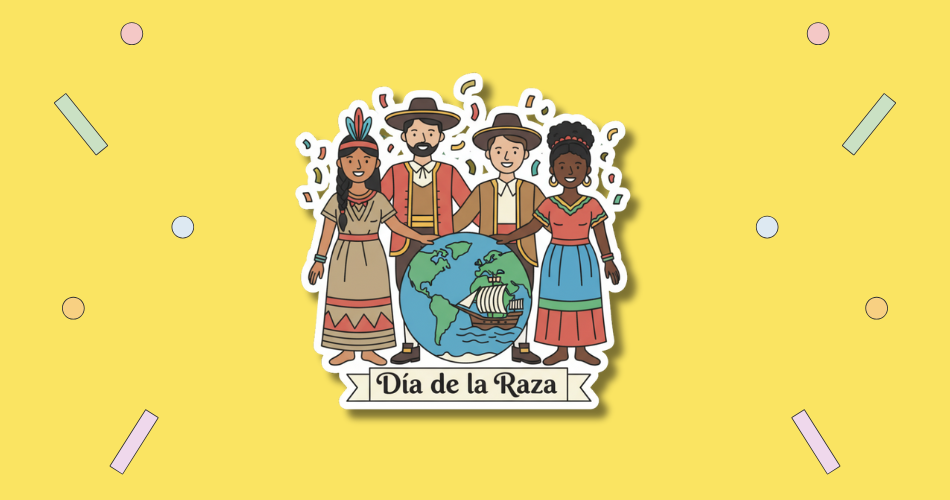
Día de la Raza is observed on October 12 each year, and it commemorates the encounter between European and Indigenous peoples following Christopher Columbus’s arrival in the Americas in 1492, as well as the resulting cultural and ethnic blending across Latin America and Spain.
Contents
HT Meter
Does this day matter to you?
Say that it does, and say whether you will be marking it. Both are anonymous to nobody but kind to everybody.
This day matters to me
0 Be the first to say so
Quietly remembered
0 Nobody has said so yet
Notes of remembrance
Join those marking this day to share a word, a memory, or the reason it matters to you.
These notes are kept for the people marking this day. Say you will be marking it to read them and to leave your own.
You have already shared a note here recently.
No notes yet. Yours would be the first.
History of Día de la Raza
The origins of the observance trace back to the early 20th century in Spain, where in 1892 the Spanish government proposed a celebration of Hispanic heritage tied to the 400th anniversary of Columbus’s voyage. Over time, intellectuals and political actors such as the Spanish minister Faustino Rodríguez‑San Pedro adopted the idea and formalized “Día de la Raza” to symbolize the spiritual and cultural link between Spain and its former colonies.
In Latin America, the holiday evolved in different national and political contexts. In Mexico, “Día de la Raza” was officially recognized in 1928, framed in part as a celebration of mestizaje—the mixing of Indigenous and European ancestries—as a foundational concept of national identity. Over the decades, many countries have retained, renamed, or reinterpreted the day to emphasize cultural diversity, Indigenous resistance, or intercultural dialogue.
Why is Día de la Raza important?
Día de la Raza reflects more than a historical event—it invites reflection on identity, power, and memory. It draws attention to how the “encounter” in 1492 was not just a meeting of continents, but the start of a long, often violent, and deeply transformative period in which Indigenous societies were colonized, cultures shifted, and new societies emerged. Recognizing that complexity means acknowledging not only cultural fusion but also conflict, dispossession, and resilience.
Spain Hispanic Day
At the same time, the idea of “La Raza” in this context has been used to promote unity among Spanish‑speaking peoples and to affirm a shared heritage across the Americas. It fosters conversations about how modern Latin American and Hispanic identities are shaped by Indigenous, European, and African roots, and it opens space for evolving how societies understand heritage, justice, and inclusion.
Some aspects of its significance:
- It commemorates the 1492 arrival of Columbus and its lasting legacies
- It highlights the mestizo or mixed cultural identities of many Latin American nations
- It provokes reflection on colonial histories, Indigenous experiences, and power dynamics
- It offers a platform for celebrating cultural diversity and shared heritage
- It encourages reinterpretation, renaming, or reform in nations reconsidering their historical narratives
How to Observe Día de la Raza
Make it yours
How would you like to spend Día de la Raza?
Tick what fits you, and we will put together ideas made for this day — not for any day.
You can honor Día de la Raza by engaging in thoughtful learning and respectful dialogue. Read or listen to voices from Indigenous communities in the Americas, explore how the day is interpreted in different countries, and share stories or cultural expressions (music, literature, art) that reflect Indigenous and mestizo traditions. Use the day as a prompt to deepen your understanding of colonial histories and their enduring effects.
Columbus Day
If you’re part of a cultural or educational community, host a conversation, panel, or exhibit that brings multiple perspectives—Indigenous, Afro‑Latin, mestizo—into focus. Encourage participants to reflect on how identity, memory, language, and resistance play into the complex legacy. Even a small gathering—book reading, film screening, poetry share—can make the day meaningful on a local scale.
Here are some ideas you could try:
- Read literature or memoirs by Indigenous authors from Latin America
- Watch a documentary about colonization, Indigenous resistance, or mestizo identity
- Host a roundtable or discussion about how different peoples experience memory of 1492
- Share cultural expressions—music, dance, crafts—that reflect Indigenous or Afro‑Latin heritage
- Use social media to highlight local or international Indigenous voices or perspectives
Día de la Raza Dates Table
| Year | Date | Day |
|---|---|---|
| 2026 | October 12 | Monday |
| 2027 | October 12 | Tuesday |
| 2028 | October 12 | Thursday |
| 2029 | October 12 | Friday |
| 2030 | October 12 | Saturday |