
Djibouti Independence Day
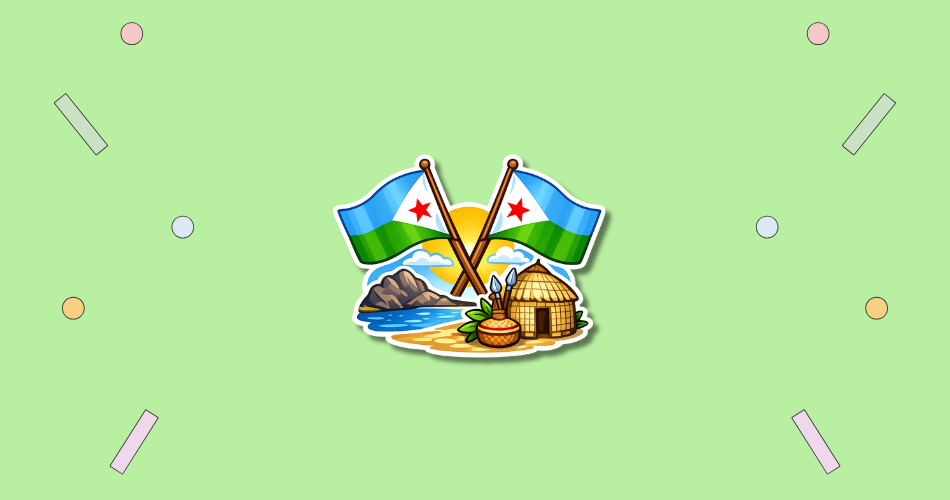
Djibouti Independence Day is observed every year on June 27. In 2027, this date falls on a Sunday. It is a national public holiday in Djibouti, marking the country’s independence from France in 1977. The day is also closely connected with national identity, public ceremonies, flags, speeches, and cultural events. For Djiboutians at home and abroad, it is a date for honoring sovereignty, remembering the road to self-government, and recognizing the country’s place in the Horn of Africa. 1 2
Contents
See also: Somalia Independence Day, Mozambique Independence Day, Madagascar Independence Day, Togo Independence Day
HT Meter
Does this day matter to you?
Tap the meter if it does, and say whether you will be celebrating — that is what opens the wishes from everybody else who will be.
This day matters to me
0 Be the first to say so
Just getting started
0 Let others know you’re in.
Wishes, greetings and stories
Join the celebration to share a wish, a greeting, or how this day goes in your house.
These are kept for the people celebrating this day. Say you will be celebrating to read them and to add your own.
You have already shared something here recently.
Nothing here yet. Yours would be the first.
History of Djibouti Independence Day
Djibouti was formerly known as French Somaliland and later as the French Territory of the Afars and the Issas. France had expanded its presence in the area during the late nineteenth century, and the territory remained under French control for decades. After earlier votes did not bring independence, a 1977 referendum supported separation from France. On June 27, 1977, the territory became the independent Republic of Djibouti, and Hassan Gouled Aptidon became the country’s first president.
Somalia Independence Day
The holiday is now understood as Djibouti’s national day as well as its independence anniversary. It connects the modern republic with the political changes that led from colonial administration to national self-rule. The day also reflects Djibouti’s identity as a small but strategically important country located near the Bab el Mandeb Strait, where the Red Sea meets the Gulf of Aden. Independence Day gives public attention to the country’s history, its people, and the continuing meaning of sovereignty.
Why is Djibouti Independence Day important?
Djibouti Independence Day matters because it marks the formal beginning of Djibouti as an independent nation. The date is tied to the end of French rule and to the creation of the republic’s own national institutions. It gives citizens a shared anniversary that belongs to the whole country, not to one region, family, or political generation. As a public holiday, it also gives schools, workplaces, and communities a visible way to recognize the country’s founding moment.
The day also has wider historical value because Djibouti’s independence was part of the larger story of decolonization in Africa. Its location has long made the country important for trade, ports, regional relations, and international connections. Remembering independence helps explain why Djibouti’s geography, languages, communities, and political history are so closely connected to the Horn of Africa and the Red Sea region. The holiday gives people a reason to learn that background in a direct and accessible way.
- It honors Djibouti’s independence from France.
- It keeps the 1977 referendum in public memory.
- It recognizes the founding of the republic.
- It highlights national unity and identity.
- It connects younger generations with Djiboutian history.
How to Celebrate Djibouti Independence Day
Make it yours
How would you like to spend Djibouti Independence Day?
Tick what fits you, and we will put together ideas made for this day — not for any day.
Madagascar Independence Day
Raise or display the Djiboutian flag, read about the events of 1977, or learn the basic history of French Somaliland and the French Territory of the Afars and the Issas. In Djibouti, public observances may include official ceremonies, parades, speeches, and cultural programs. Families and communities may also mark the day with shared meals, music, and conversations about national history. For people outside Djibouti, a simple message to relatives or friends can be a thoughtful way to recognize the anniversary.
Schools, cultural groups, and community organizations can use the day for short history lessons, map activities, or discussions about Djibouti’s role in the Horn of Africa. A respectful celebration does not need to be elaborate; the focus can stay on independence, citizenship, and the people whose lives were shaped by the country’s move to sovereignty. Reading a country profile, learning about Djibouti City’s port, or exploring the meaning of the flag can make the day more educational. The best observances keep the tone proud, informed, and connected to real history.
- Display the Djiboutian flag respectfully.
- Read about the 1977 independence referendum.
- Share a meal with family or friends.
- Watch cultural performances or historical programs.
- Send greetings to Djiboutian relatives or neighbors.
Djibouti Independence Day Dates
| Year | Date | Day of the week |
|---|---|---|
| 2026 | June 27 | Saturday |
| 2027 next | June 27 | Sunday |
| 2028 | June 27 | Tuesday |
| 2029 | June 27 | Wednesday |
| 2030 | June 27 | Thursday |