
Mozambique Independence Day
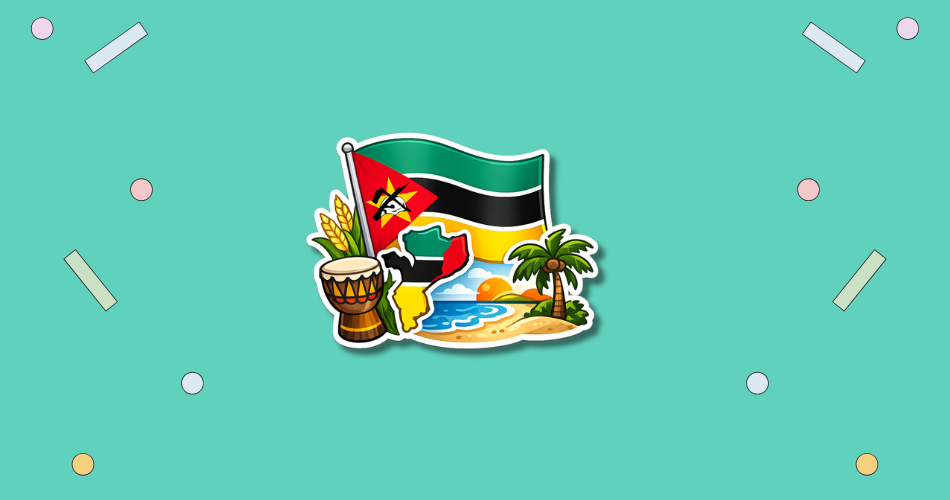
Mozambique Independence Day is observed every year on June 25. In 2027, this date falls on a Friday. The day marks Mozambique’s independence from Portugal in 1975 and is a national public holiday in the country. It is also known in Portuguese as Dia da Independência Nacional. The date is used to honor the liberation struggle, reflect on the responsibilities of self-government, and recognize Mozambican identity, history, and national pride. 1
Contents
See also: African Liberation Day, Togo Independence Day, Independence Day in Eritrea
HT Meter
Does this day matter to you?
Tap the meter if it does, and say whether you will be celebrating — that is what opens the wishes from everybody else who will be.
This day matters to me
0 Be the first to say so
Just getting started
0 Let others know you’re in.
Wishes, greetings and stories
Join the celebration to share a wish, a greeting, or how this day goes in your house.
These are kept for the people celebrating this day. Say you will be celebrating to read them and to add your own.
You have already shared something here recently.
Nothing here yet. Yours would be the first.
History of Mozambique Independence Day
Mozambique was under Portuguese rule for centuries before independence movements gained strength in the twentieth century. In 1962, several nationalist groups joined to form the Mozambique Liberation Front, widely known as FRELIMO, with Eduardo Mondlane as its first president. FRELIMO launched an armed struggle against Portuguese rule in September 1964, beginning a long war for independence. After political change in Portugal in 1974, an agreement between Portugal and FRELIMO set Mozambique on the path to full independence on June 25, 1975.
Madagascar Independence Day
On that date, Mozambique became an independent state led by FRELIMO, with Samora Machel serving as president. The holiday is therefore tied not only to a single declaration of independence, but also to years of organizing, conflict, negotiation, and political transition. Today, Mozambique Independence Day is understood as the country’s national day and a moment to look back on the end of colonial rule. It also gives Mozambicans a fixed annual date to think about sovereignty, national unity, and the work of building a country after independence.
Why is Mozambique Independence Day important?
Mozambique Independence Day is important because it marks the moment when the country gained the right to govern itself after Portuguese colonial rule. For Mozambicans, the date carries historical weight because independence came after a long struggle that affected families, communities, and the direction of the nation. Public holidays like this help keep national history visible, especially for younger generations who did not live through the independence period. The day also gives schools, families, and communities a reason to discuss the people and events that shaped modern Mozambique.
The holiday also matters beyond politics. Independence changed the way Mozambique presented itself to the world, from its flag and national institutions to its place among other African nations. It became a point of reference for national identity, public memory, and civic life. For people of Mozambican heritage living abroad, June 25 can also be a connection to language, family history, music, food, and the country’s place on the southeastern coast of Africa.
- It honors Mozambique’s independence from Portugal.
- It keeps the history of FRELIMO and the liberation struggle visible.
- It gives families a reason to discuss national history.
- It recognizes the meaning of sovereignty and self-government.
- It connects Mozambicans at home and abroad to a shared date.
How to Celebrate Mozambique Independence Day
Make it yours
How would you like to spend Mozambique Independence Day?
Tick what fits you, and we will put together ideas made for this day — not for any day.
Djibouti Independence Day
Learn about Mozambique’s independence history through books, documentaries, museum materials, or reliable educational articles. Families can talk about the country’s flag, national symbols, and the meaning of June 25. Mozambican music, food, and storytelling can also make the day more personal, especially for people teaching children about their heritage. In Mozambique, the public holiday may be marked through civic programs, community gatherings, and time away from normal school or work routines.
A more thoughtful celebration can focus on listening to different generations. Older relatives may remember the early years of independence, while younger people may connect the holiday with present-day questions about citizenship, opportunity, and national development. Schools and community groups can use the date to discuss both the achievement of independence and the challenges that followed. The strongest celebrations are not only patriotic; they also make room for history, memory, and honest reflection.
- Read a short history of Mozambique’s independence.
- Look up the meaning of the Mozambican flag.
- Listen to Mozambican music or poetry.
- Cook a Mozambican-inspired meal with family.
- Ask an older relative about memories connected to the country.
Mozambique Independence Day Dates
| Year | Date | Day of the week |
|---|---|---|
| 2026 | June 25 | Thursday |
| 2027 next | June 25 | Friday |
| 2028 | June 25 | Sunday |
| 2029 | June 25 | Monday |
| 2030 | June 25 | Tuesday |