



Hawaii Flag Day
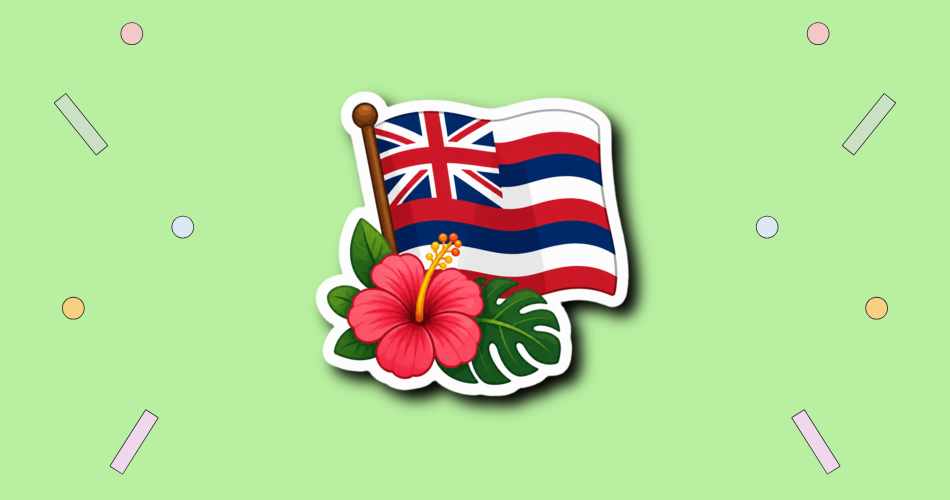
Hawaii Flag Day is celebrated annually on July 31. In 2027, this date falls on a Saturday. This day honors the distinctive Hawaiian flag, known as Ka Hae Hawaiʻi, which is the only U.S. state flag to incorporate another nation’s flag—the Union Jack of the United Kingdom. The observance reflects the state’s unique history and cultural heritage, blending Polynesian, American, and British influences.
Contents
HT Meter
Does this day matter to you?
Tap the meter if it does, and say whether you will be celebrating — that is what opens the wishes from everybody else who will be.
This day matters to me
0 Be the first to say so
Just getting started
0 Let others know you’re in.
Wishes, greetings and stories
Join the celebration to share a wish, a greeting, or how this day goes in your house.
These are kept for the people celebrating this day. Say you will be celebrating to read them and to add your own.
You have already shared something here recently.
Nothing here yet. Yours would be the first.
History of Hawaii Flag Day
The Hawaiian flag was commissioned in 1816 by King Kamehameha I, who sought a symbol of his kingdom’s sovereignty while acknowledging its diplomatic ties with Great Britain. The original design featured the British Union Jack in the canton, reflecting the friendship between Kamehameha I and King George III. Over the years, the flag underwent several modifications, and in 1845 the current version with eight horizontal stripes—representing the eight main Hawaiian Islands—was officially adopted. The colors red, white, and blue draw from both British and American flags, symbolizing the islands’ land, sea, and sky.
Hawaii Flag Day was officially proclaimed on July 31, 1990, by Governor John D. Waiheʻe III. The date was chosen to coincide with the anniversary of the restoration of Hawaiian sovereignty in 1843, when British Admiral Richard Darton Thomas returned control of the islands to King Kamehameha III after a brief occupation. Since then, the day has served as a time to reflect on the flag’s journey from the Kingdom of Hawaii to its current status as a state symbol, and to honor the resilience of the Hawaiian people.
Why is Hawaii Flag Day important?
Hawaii Flag Day matters because it celebrates a symbol that embodies the islands’ complex history and cultural diversity. The flag’s unique design tells a story of diplomacy, sovereignty, and adaptation—from an independent kingdom to a U.S. state. It also serves as a reminder of the Hawaiian Kingdom’s legacy and the enduring spirit of its people. Commemorating this day fosters pride among residents and educates visitors about Hawaii’s rich heritage.
- Here are five key reasons why Hawaii Flag Day is significant:
- It acknowledges the Hawaiian flag as a powerful emblem of identity and resistance, especially after the overthrow of the Hawaiian Kingdom in 1893.
- The flag’s inclusion of the Union Jack highlights Hawaii’s historical relationship with Great Britain, a rare feature among state flags.
- The eight stripes represent the unity of the major Hawaiian Islands, reinforcing a sense of community and belonging.
- The day aligns with Sovereignty Restoration Day, connecting the flag to important events in Hawaiian history.
- It provides an opportunity to learn about Hawaiian culture, language, and traditions, promoting cultural preservation.
How to Celebrate Hawaii Flag Day
Make it yours
How would you like to spend Hawaii Flag Day?
Tick what fits you, and we will put together ideas made for this day — not for any day.

National Hawaii Day
Celebrating Hawaii Flag Day is a wonderful way to honor the state’s unique heritage. One of the simplest ways is to fly the Hawaiian flag proudly at home, school, or work. You can also take time to learn about the flag’s history—read books, visit online resources, or attend local events that share stories of the Hawaiian Kingdom. Many cultural centers and museums, such as the Bishop Museum in Honolulu, offer special exhibits or educational programs on this day.
- Here are five activities to mark the occasion:
- Display the Hawaiian flag and encourage others to learn about its meaning.
- Visit the Puʻukoholā Heiau National Historic Site on the Big Island, where the flag flies prominently.
- Attend a community event or parade that celebrates Hawaiian culture, often featuring traditional music and hula.
- Share photos and facts about the flag on social media using hashtags like #HawaiiFlagDay and #KaHaeHawaii.
- Support local Hawaiian artists and businesses by purchasing items that reflect the flag’s design or the islands’ culture.
Hawaii Flag Day Dates
| Year | Date | Day of the week |
|---|---|---|
| 2026 | July 31 | Friday |
| 2027 next | July 31 | Saturday |
| 2028 | July 31 | Monday |
| 2029 | July 31 | Tuesday |
| 2030 | July 31 | Wednesday |
King Kamehameha Day
Sorry to hear you didn't enjoy this article...
Help us make it better!