



National Hawaii Day
National Hawaii Day is observed every year on July 5. In 2027, this date falls on a Monday. The day recognizes Hawaii’s heritage, landscapes, people, and place as the 50th state of the United States. It is a warm cultural observance, but it also points readers toward a deeper history that includes Native Hawaiian traditions, statehood, language, music, food, and the islands’ relationship with land and sea. For many people, the day is a reason to learn more about Hawaii beyond tourism images and to appreciate the islands with care and respect. 1 2 3
Contents
See also: King Kamehameha Day, Lei Day, National Play Your Ukulele Day, Prince Kuhio Day
HT Meter
Does this day matter to you?
Tap the meter if it does, and say whether you will be celebrating — that is what opens the wishes from everybody else who will be.
This day matters to me
0 Be the first to say so
Just getting started
0 Let others know you’re in.
Wishes, greetings and stories
Join the celebration to share a wish, a greeting, or how this day goes in your house.
These are kept for the people celebrating this day. Say you will be celebrating to read them and to add your own.
You have already shared something here recently.
Nothing here yet. Yours would be the first.
History of National Hawaii Day
The modern observance was introduced in 2017 as part of a state-by-state series that recognizes each U.S. state in the order it joined the Union. Hawaii was admitted as the 50th state in 1959, after Congress approved the Hawaii Admission Act, residents voted on the required statehood propositions, and President Dwight D. Eisenhower issued the proclamation admitting Hawaii into the Union on August 21. National Hawaii Day is not the same as Hawaii’s official Statehood Day, which is observed in August. July 5 is used for this informal national observance, while the statehood anniversary itself remains connected with late August.
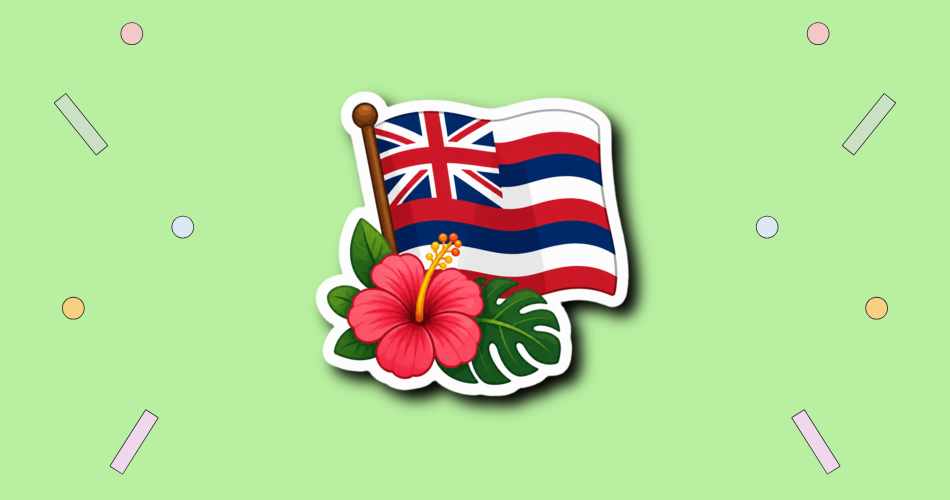
Hawaii Flag Day
Hawaii’s story reaches far beyond statehood. The islands were home to Native Hawaiian culture, language, governance, navigation, agriculture, and spiritual traditions long before they became part of the United States. Today, National Hawaii Day is commonly used to recognize the beauty of the islands, the strength of Hawaiian cultural expression, and the contributions Hawaii has made to American life. A thoughtful approach to the day keeps the focus on learning, respect, and appreciation rather than turning Hawaii into a simple vacation theme.
Why is National Hawaii Day important?
National Hawaii Day matters because it gives attention to a state with a distinct history and culture within the United States. Hawaii is geographically distant from the continental U.S., but it has played a major role in American history, Pacific travel, military history, agriculture, music, food, environmental science, and cultural exchange. The day can help readers connect the familiar images of beaches, volcanoes, and hula with the deeper stories behind them. It also makes room for learning about the difference between enjoying Hawaiian culture and treating it casually or inaccurately.
The observance is also useful because Hawaii’s natural and cultural resources need respect. The islands are known for extraordinary ecosystems, but they also face pressures from over-tourism, high costs, climate concerns, and the protection of sacred and historic places. Learning about Hawaii with care can lead to better travel choices, stronger support for local communities, and more accurate understanding of Native Hawaiian history. National Hawaii Day works best when it combines appreciation with humility.
- It highlights Hawaii’s place in U.S. history.
- It invites people to learn beyond postcards and travel ads.
- It supports respect for Hawaiian language and culture.
- It points attention toward responsible travel choices.
- It honors the islands’ beauty without ignoring their complexity.
How to Celebrate National Hawaii Day
Make it yours
How would you like to spend National Hawaii Day?
Tick what fits you, and we will put together ideas made for this day — not for any day.
King Kamehameha Day
Read about Hawaii’s history, including Native Hawaiian society, the Hawaiian Kingdom, annexation, territorial years, and statehood. Listen to Hawaiian music, learn the meaning of a few Hawaiian words, or watch a hula performance from a reputable cultural source. Cook a dish associated with the islands, such as poke, kalua-style pork, loco moco, or a plate lunch-inspired meal, while taking time to learn where the food traditions come from. A small, informed celebration is better than a loud party built only around stereotypes.
Use the day to think about responsible travel and support for local communities. Anyone planning a future trip can learn about protected sites, reef-safe behavior, local etiquette, and ways to spend money with Hawaii-based businesses. Readers who are not traveling can still support Hawaiian authors, artists, musicians, farms, and cultural organizations from afar. The day also fits well in classrooms, libraries, and family conversations about geography, statehood, Pacific history, and cultural respect.
- Learn how to pronounce Hawaii place names more carefully.
- Read a book by a Hawaii-based or Native Hawaiian author.
- Make a Hawaiian-inspired meal and study its background.
- Watch a documentary about Hawaiian history or conservation.
- Support a local maker, farm, artist, or cultural nonprofit.
National Hawaii Day Dates
| Year | Date | Day of the week |
|---|---|---|
| 2026 | July 5 | Sunday |
| 2027 next | July 5 | Monday |
| 2028 | July 5 | Wednesday |
| 2029 | July 5 | Thursday |
| 2030 | July 5 | Friday |