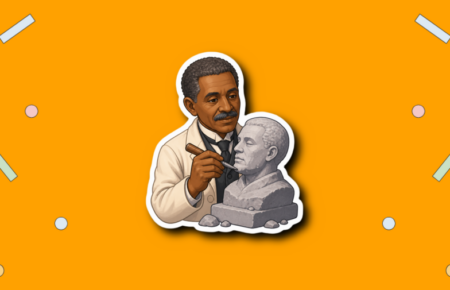




Loomis Day

Loomis Day is observed every year on May 30. In 2027, this date falls on a Sunday. The day recognizes Mahlon Loomis, an American dentist and inventor connected with early ideas about wireless telegraphy. It is a technology-minded observance that looks back at the long path from experimental electrical signaling to the wireless tools people use every day. Loomis Day is especially suited for learning about invention, communications history, radio, and the persistence required to test ideas that seem unlikely at first. 1
Contents
See also: International Marconi Day, World Radiography Day, World Radio Day, Learn Your Name In Morse Code Day, Morse Code Day, Nikola Tesla Day
HT Meter
Does this day matter to you?
Tap the meter if it does, and say whether you will be celebrating — that is what opens the wishes from everybody else who will be.
This day matters to me
0 Be the first to say so
Just getting started
0 Let others know you’re in.
Wishes, greetings and stories
Join the celebration to share a wish, a greeting, or how this day goes in your house.
These are kept for the people celebrating this day. Say you will be celebrating to read them and to add your own.
You have already shared something here recently.
Nothing here yet. Yours would be the first.
History of Loomis Day
Mahlon Loomis lived in the 19th century and worked as a dentist, but his best-known legacy is tied to communication rather than dentistry. He experimented with the idea that signals could be sent without the connecting wires used by traditional telegraph systems. His U.S. patent, No. 129,971, was titled “Improvement in Telegraphing” and was dated July 30, 1872. The patent described a way to use natural electricity and elevated conductors for telegraphic purposes without ordinary batteries, wires, or cables between stations.

International Marconi Day
Loomis’s experiments are usually remembered for their boldness as much as for their technical uncertainty. Accounts of his work describe kites, copper conductors, mountaintop locations, and attempts to detect signals over a distance. Later historians have treated his claims carefully, noting that his explanation of atmospheric electricity does not match modern radio science in a simple way. Even so, Loomis remains an interesting figure because he imagined a world in which messages could travel through the air, long before wireless communication became ordinary.
Why is Loomis Day important?
Loomis Day gives attention to an early chapter in the history of wireless communication. Modern life depends heavily on signals that move invisibly through the air, including radio broadcasts, mobile phones, Wi-Fi, navigation systems, emergency alerts, and many everyday connected devices. Remembering Loomis helps make that technology feel less automatic and more historical. It shows that inventions often begin with questions, imperfect equipment, and experiments that do not yet have the language of later science.
The day also has educational value because it connects science history with practical curiosity. Loomis was not working in a modern electronics lab, and he did not have access to the later theories and instruments that would shape radio engineering. His story makes room for a balanced view of invention: not every early claim becomes a clean origin story, but early attempts can still matter. Loomis Day encourages readers to think about how observation, risk, and persistence can push ideas forward before the rest of the world knows what to do with them.
- It highlights an overlooked figure in communications history.
- It connects early telegraphy with modern wireless technology.
- It makes invention feel experimental rather than polished.
- It gives students a useful entry point into radio history.
- It honors curiosity that crosses professional boundaries.
How to Celebrate Loomis Day
Make it yours
How would you like to spend Loomis Day?
Tick what fits you, and we will put together ideas made for this day — not for any day.

Morse Code Day
Read about Mahlon Loomis, his patent, and the broader history of telegraphy and wireless communication. A simple way to mark the day is to compare older wired communication systems with the wireless tools used today. Look up how antennas work, learn the basic difference between telegraphy and radio, or try a safe beginner project such as assembling a simple radio kit. The day also fits well in classrooms, libraries, makerspaces, and technology clubs.
Loomis Day can also be used to notice the wireless systems that usually stay in the background. Think about how many daily tasks rely on invisible signals, from checking the weather to using a phone map or streaming audio. For a more reflective activity, consider how many inventors tested ideas that were misunderstood, incomplete, or ahead of their time. Loomis’s story works best when it is treated not as a perfect invention myth, but as a reminder that progress often begins with unusual questions.
- Read the text of Loomis’s 1872 patent.
- Learn the difference between wired telegraphy and wireless signaling.
- Build or study a basic radio receiver.
- Visit a local science museum or technology exhibit.
- Talk with students about how inventions are tested and improved.
Loomis Day Dates
| Year | Date | Day of the week |
|---|---|---|
| 2026 | May 30 | Saturday |
| 2027 next | May 30 | Sunday |
| 2028 | May 30 | Tuesday |
| 2029 | May 30 | Wednesday |
| 2030 | May 30 | Thursday |