



National Button Battery Awareness Day
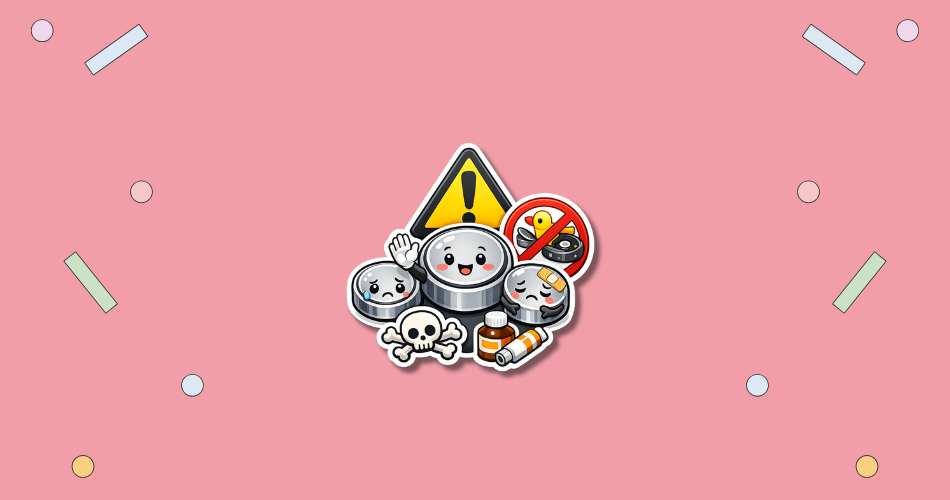
National Button Battery Awareness Day is observed every year on June 12. In 2027, this date falls on a Saturday. This awareness day focuses on the serious danger that button and coin batteries can pose when swallowed by children. These small batteries are found in many ordinary household items, including remotes, key fobs, toys, watches, thermometers, scales, hearing aids, and light-up products. The day asks parents, caregivers, schools, retailers, manufacturers, and health professionals to treat button battery safety as a practical child-protection issue, not a rare accident. 1 2 3
Contents
See also: Check Your Batteries Day, National Battery Day, Global Recycling Day
HT Meter
Does this day matter to you?
Say that it does, and say whether you will be marking it. Both are anonymous to nobody but kind to everybody.
This day matters to me
0 Be the first to say so
Quietly remembered
0 Nobody has said so yet
Notes of remembrance
Join those marking this day to share a word, a memory, or the reason it matters to you.
These notes are kept for the people marking this day. Say you will be marking it to read them and to leave your own.
You have already shared a note here recently.
No notes yet. Yours would be the first.
History of National Button Battery Awareness Day
National Button Battery Awareness Day was established in 2021 by Trista Hamsmith in memory of her daughter, Reese Hamsmith. Reese swallowed a button battery in 2020 and died at 18 months old after suffering severe internal injuries. Her story became closely connected with wider efforts to educate families about the hidden hazards of batteries that can come loose from everyday devices. The observance grew from grief into advocacy, with a focus on prevention, safer product design, and clearer warnings.
Check Your Batteries Day
The issue also became part of broader product-safety work in the United States. Reese’s Law, enacted in 2022, created federal safety requirements for button cell and coin batteries and for consumer products that contain them. These rules include requirements for secure battery compartments and warning labels, helping reduce the chance that a young child can access a battery. Today, the day is understood as both a family safety reminder and a call for stronger safeguards in the products people use at home.
Why is National Button Battery Awareness Day important?
A swallowed button battery can become lodged in a child’s esophagus and cause serious injury very quickly. Moist tissue can complete an electrical circuit, creating a caustic chemical reaction that burns delicate tissue. The symptoms may not be obvious at first, and caregivers may not see the child swallow the battery. That is why prevention, fast recognition, and emergency care are central messages of the day.
The observance matters because button batteries are small, shiny, and common. They may be inside products made for adults, not just toys, which means families may overlook them during normal childproofing. A loose battery in a drawer, a remote with a broken cover, or a key fob that opens easily can become a serious hazard. The day helps turn a hidden risk into a concrete checklist that families and communities can act on.
- Small batteries can cause severe injuries in a short time.
- Many dangerous exposures happen when no adult sees the ingestion.
- Everyday devices may contain batteries that children can reach.
- Safe storage and secure compartments reduce the risk.
- Public awareness supports better laws, labels, and product design.
How to Observe National Button Battery Awareness Day
Make it yours
How would you like to spend National Button Battery Awareness Day?
Tick what fits you, and we will put together ideas made for this day — not for any day.
National Battery Day
Check the home for devices that use button or coin batteries, especially items that children can reach. Look closely at remote controls, key fobs, bathroom scales, thermometers, flameless candles, musical greeting cards, small toys, and light-up gadgets. Make sure battery compartments are secured with a screw or another child-resistant closure. Store spare batteries in a locked or high location, and dispose of used batteries safely instead of leaving them loose in drawers, purses, or pockets.
Share the safety message with grandparents, babysitters, teachers, daycare workers, and anyone who cares for young children. Ask schools, childcare centers, and community groups to check classrooms and play areas for unsafe battery access. Families should also know that suspected ingestion is an emergency and should seek immediate medical help. Awareness is most useful when it leads to visible changes in the places where children live, learn, and play.
- Inspect remotes, key fobs, scales, and small gadgets.
- Tape or remove unsafe items until they can be replaced.
- Keep spare and used batteries out of children’s reach.
- Teach caregivers that suspected ingestion needs emergency care.
- Share a button battery safety checklist with family members.
National Button Battery Awareness Day Dates
| Year | Date | Day of the week |
|---|---|---|
| 2026 | June 12 | Friday |
| 2027 next | June 12 | Saturday |
| 2028 | June 12 | Monday |
| 2029 | June 12 | Tuesday |
| 2030 | June 12 | Wednesday |