
National Static Cling Day
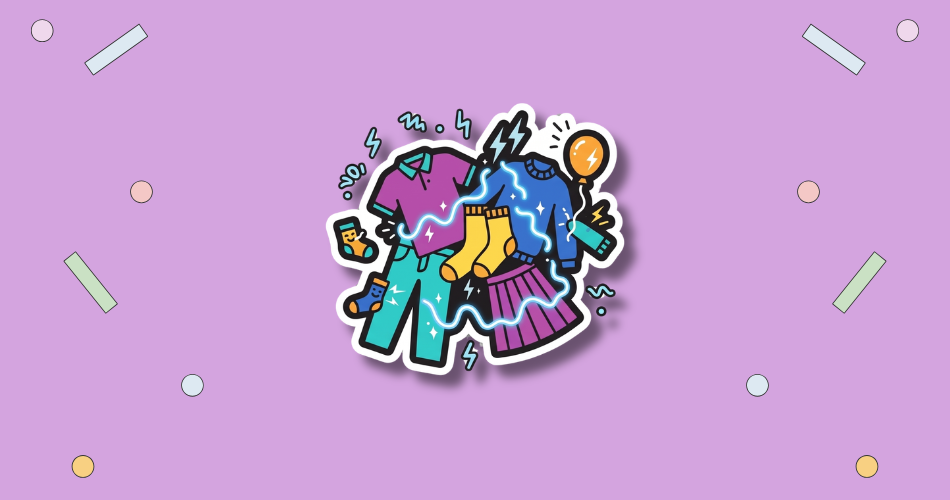
National Static Cling Day is celebrated on April 26. This day is dedicated to recognizing the peculiar physical phenomenon of static cling, which occurs when stray electrons build up on the surfaces of objects, causing them to adhere to one another. While it is often seen as a minor nuisance in laundry or hair care, the day encourages a playful and scientific look at the invisible forces that affect our daily lives. In 2027, this date falls on a Monday.
Contents
See also: Richter Scale Day, Science Education Day, National Public Science Day
HT Meter
Does this day matter to you?
Say that it does, and say whether you will be marking it. Both are anonymous to nobody but kind to everybody.
This day matters to me
0 Be the first to say so
Quietly remembered
0 Nobody has said so yet
Notes of remembrance
Join those marking this day to share a word, a memory, or the reason it matters to you.
These notes are kept for the people marking this day. Say you will be marking it to read them and to leave your own.
You have already shared a note here recently.
No notes yet. Yours would be the first.
History of National Static Cling Day
National Static Cling Day first appeared in the public consciousness in the early 2000s. Like many unofficial holidays centered on everyday observations, there is no single individual or organization that has officially claimed credit for its creation. The date was likely chosen to coincide with other science-related observances in late April, providing a lighthearted opportunity to discuss basic physics in a relatable context.
National Static Electricity Day
Despite the lack of a formal founding story, the holiday has gained popularity through educational websites and social media. It serves as a specific offshoot of the broader National Static Electricity Day held in January, focusing specifically on the “clinging” effect rather than just the “shock” or discharge. Over the years, it has become a favorite for teachers and parents who use the day to introduce children to the concepts of atoms, protons, and electrons through simple, hands-on demonstrations.
Why is National Static Cling Day important?
This day is important because it turns a common household annoyance into a teachable moment about the laws of physics. Static cling is a visible result of the triboelectric effect, where certain materials become electrically charged after coming into contact with another different material. By highlighting this, the holiday encourages curiosity about the natural world and helps demystify the science behind why clothes stick together in the dryer or why a balloon can stick to a wall.
On a practical level, the day promotes awareness of how to control and mitigate static electricity in various environments. In industrial settings, static can be dangerous, potentially causing fires or damaging sensitive electronic components. By observing this day, people learn about the role of humidity, insulators, and conductors in managing electrical charges, which contributes to both personal convenience and technological safety.
- Learning about static electricity helps explain complex natural events like lightning.
- Understanding surface charges is essential for the function of office tools like photocopiers.
- The holiday encourages the use of simple household science to solve daily problems.
- It highlights the difference between static electricity and current electricity.
- Promoting curiosity about small phenomena can lead to a deeper interest in STEM fields.
How to Observe National Static Cling Day
Make it yours
How would you like to spend National Static Cling Day?
Tick what fits you, and we will put together ideas made for this day — not for any day.
National Electricity Day (Fly a Kite Day)
Observing this day can be as simple as noticing the “zaps” and “clings” that happen throughout your morning routine. You can perform small experiments, such as rubbing a plastic comb through your hair and using it to pick up tiny pieces of paper, or rubbing a balloon on a wool sweater to see how long it remains stuck to a surface. These activities provide a visual demonstration of how electrons move from one object to another to create an imbalance of charges.
For those looking for practical benefits, the day is an excellent time to implement “de-clinging” strategies around the house. This might include adding a damp washcloth to the dryer to increase humidity, using dryer balls, or applying a small amount of lotion to the skin to prevent clothes from sticking. Sharing these tips or photos of your most impressive “static hair” moments on social media helps spread the fun and educational spirit of the holiday.
- Rub a balloon on your shirt and see how many items it can attract.
- Use a metal clothes hanger to “discharge” static from a dress or pair of slacks.
- Experiment with different fabrics like silk, wool, and polyester to see which clings most.
- Teach a child about atoms and electrons using simple household objects.
- Check the humidity levels in your home, as dry air significantly increases static build-up.
National Static Cling Day Dates Table
| Year | Date | Day of the week |
|---|---|---|
| 2026 | April 26 | Sunday |
| 2027 next | April 26 | Monday |
| 2028 | April 26 | Wednesday |
| 2029 | April 26 | Thursday |
| 2030 | April 26 | Friday |