


National Train Day
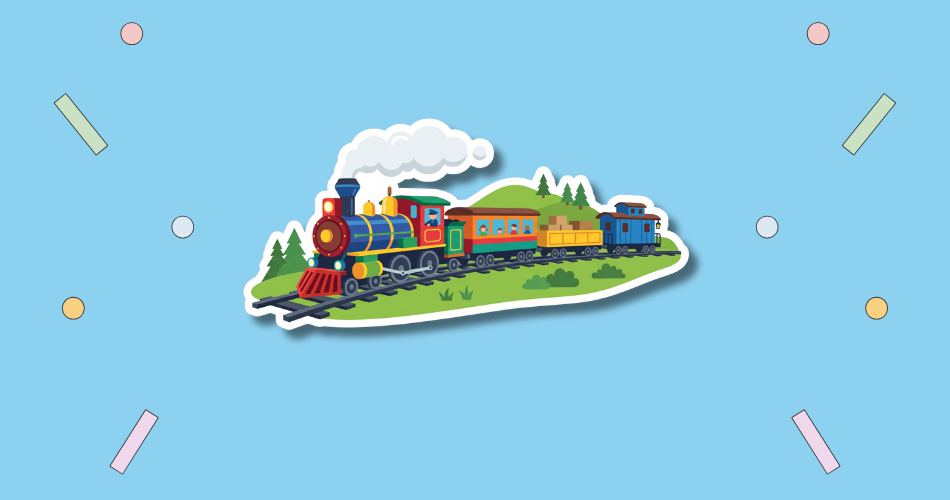
National Train Day is observed on the Saturday closest to May 10. In 2026, it falls on May 9. This day celebrates the expansive history of the railroad industry and its essential role in moving people and goods across the country. It encourages the public to explore train travel as a reliable and scenic alternative to driving or flying.
Contents
See also: Pony Express Day, Ford Mustang Day
HT Meter
Does this day matter to you?
Tap the meter if it does, and say whether you will be celebrating — that is what opens the wishes from everybody else who will be.
This day matters to me
0 Be the first to say so
Just getting started
0 Let others know you’re in.
Wishes, greetings and stories
Join the celebration to share a wish, a greeting, or how this day goes in your house.
These are kept for the people celebrating this day. Say you will be celebrating to read them and to add your own.
You have already shared something here recently.
Nothing here yet. Yours would be the first.
History of National Train Day
Amtrak established National Train Day in 2008 to spread information about the advantages of railway travel. The choice of the date was significant, as it commemorates the anniversary of the completion of the first transcontinental railroad in the United States. On May 10, 1869, the “Golden Spike” was driven into the ground at Promontory Summit, Utah, connecting the Union Pacific and Central Pacific railroads and effectively joining the East and West Coasts.
National Ship Via Rail Day
For several years, Amtrak hosted large-scale celebrations in major cities like Washington, D.C., Philadelphia, and Chicago, featuring equipment displays and live entertainment. However, Amtrak officially ended its national sponsorship of the program in 2015 due to budget considerations. Despite this, the holiday has continued through the efforts of local rail museums, historical societies, and train enthusiasts who organize independent events to keep the tradition alive.
Why is National Train Day important?
Trains were the primary drivers of the Industrial Revolution, allowing for the rapid transport of raw materials and finished products over long distances. Before the railroad, crossing the continent took months and involved significant danger; after the tracks were joined, that time was reduced to just a few days. This connectivity fueled the growth of new cities, transformed the national economy, and made the modern United States possible.
Today, rail travel remains important as a fuel-efficient and low-emission mode of transportation. Modern passenger trains reduce highway congestion and provide a unique vantage point of the American landscape that is inaccessible by car. For the freight industry, trains are still the backbone of the supply chain, moving massive quantities of grain, timber, and fuel to keep global trade moving smoothly.
- It honors the massive engineering feat of the transcontinental railroad
- The day promotes awareness of the environmental benefits of rail travel
- It supports the preservation of historic locomotives and station architecture
- The holiday connects communities by highlighting local transit history
- It encourages a slower, more observational style of travel for families
How to Celebrate National Train Day
Make it yours
How would you like to spend National Train Day?
Tick what fits you, and we will put together ideas made for this day — not for any day.

National Tourism Day
One of the most popular ways to celebrate is by taking a ride on a local heritage railway or a commuter line. Many railroad museums offer special excursions using vintage steam or diesel engines that only run a few times a year. It is a practical chance to see the inner workings of a cab and learn how engineers have managed these massive machines throughout different eras.
For those staying closer to home, model train displays provide a detailed look at rail history in miniature. Many clubs set up elaborate layouts on this day to show the different scales and types of tracks used around the world. Watching a model train navigate a tiny town or mountain pass is a favorite activity for children and adults alike, sparking curiosity about the real-world versions that inspired them.
- Visit a local rail museum to see historical artifacts and train cars
- Book a short trip on a passenger train to enjoy the scenery
- Watch a documentary about the building of the first transcontinental line
- Build or set up a model train set with your family at home
- Share photos of your favorite train journeys on social media