

Stonewall Riots Anniversary
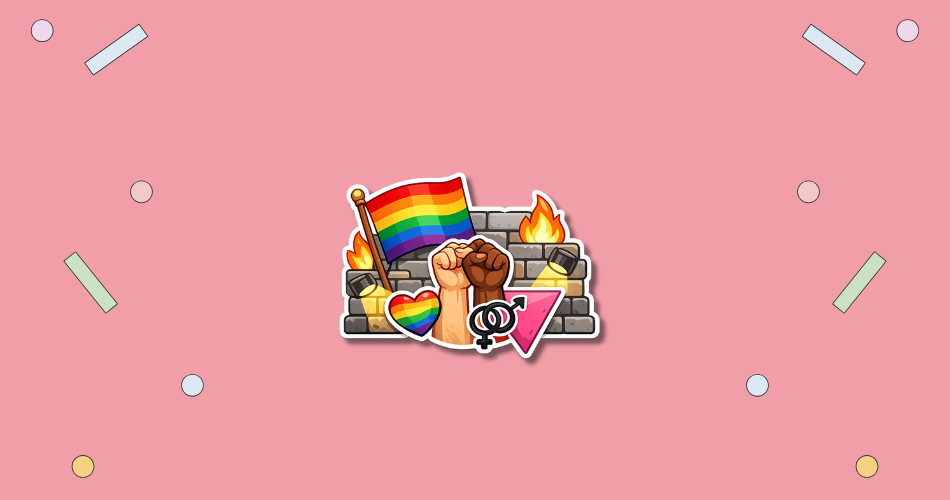
Stonewall Riots Anniversary is observed every year on June 28. In 2027, this date falls on a Monday. The observance commemorates the 1969 uprising that began after a police raid at the Stonewall Inn in Greenwich Village, New York City. It is a respectful day of remembrance, education, and reflection on LGBTQ+ civil rights history in the United States. The anniversary also connects with Pride Month, which grew in part from the organizing and marches that followed Stonewall. 1 2 3 4 5
Contents
See also: LGBTQIA+ Equal Pay Awareness Day, National Relationship Equity Day, Pulse Night of Remembrance, Transgender Day of Remembrance, National Honor Our LGBT Elders Day
HT Meter
Does this day matter to you?
Say that it does, and say whether you will be marking it. Both are anonymous to nobody but kind to everybody.
This day matters to me
0 Be the first to say so
Quietly remembered
0 Nobody has said so yet
Notes of remembrance
Join those marking this day to share a word, a memory, or the reason it matters to you.
These notes are kept for the people marking this day. Say you will be marking it to read them and to leave your own.
You have already shared a note here recently.
No notes yet. Yours would be the first.
History of Stonewall Riots Anniversary
The Stonewall Uprising began in the early morning hours of June 28, 1969, when New York City police raided the Stonewall Inn, a gay bar on Christopher Street. Police raids on gay bars were common at the time, and LGBTQ+ people often faced harassment, arrest, public humiliation, and discrimination. This raid did not follow the usual pattern of quiet dispersal. Patrons and neighborhood residents resisted, a crowd gathered outside, and the confrontation spread into several nights of protest in the surrounding streets and Christopher Park.

Christopher Street Day
The first anniversary of the uprising was marked on June 28, 1970, with Christopher Street Liberation Day, a march that became closely linked with the early development of Pride events. Stonewall was not the first act of LGBTQ+ resistance, but it became one of the most visible and influential turning points in the modern movement for LGBTQ+ rights. The site later became a powerful symbol of civil rights history, and Stonewall National Monument was established in 2016. Today, the anniversary is used to remember the people who resisted, the conditions they faced, and the organizing that followed.
Why is Stonewall Riots Anniversary important?
Stonewall Riots Anniversary matters because it keeps public attention on a moment when people who had been targeted and marginalized refused to disappear quietly. The uprising took place during a period when LGBTQ+ people faced criminalization, workplace discrimination, police harassment, and social exclusion. Remembering the anniversary helps explain why Pride is not only a public gathering or cultural event, but also part of a longer history of protest and civil rights advocacy. It also honors the courage of people whose names were not always recorded but whose actions shaped later movements.
The anniversary also gives educators, families, workplaces, and community groups a clear date for learning about LGBTQ+ history. It encourages a fuller view of American civil rights history, including the role of gay, lesbian, bisexual, transgender, queer, drag, gender-nonconforming, and allied communities. Stonewall’s legacy is especially important because it shows how local resistance can influence national conversations about law, dignity, safety, and equality. The day remains relevant wherever people continue working for equal treatment and public recognition.
- It preserves a key chapter of LGBTQ+ civil rights history.
- It honors people who resisted harassment and discrimination.
- It explains the protest roots of Pride Month.
- It supports honest education about American social movements.
- It encourages continued attention to equality and safety.
How to Observe Stonewall Riots Anniversary
Make it yours
How would you like to spend Stonewall Riots Anniversary?
Tick what fits you, and we will put together ideas made for this day — not for any day.

National Honor Our LGBT Elders Day
Read a reliable account of the Stonewall Uprising and learn about the conditions LGBTQ+ people faced in 1969. Visit a museum exhibit, public monument, archive, library guide, or local program connected with LGBTQ+ history. Teachers and discussion leaders can use the date to introduce primary sources, oral histories, photographs, and firsthand accounts. A respectful observance should avoid turning the anniversary into a generic Pride party without acknowledging the police raid, the resistance, and the people most affected.
Community observances may include panel discussions, remembrance events, documentary screenings, book displays, walking tours, or advocacy programs. Some people use the day to support LGBTQ+ community centers, youth services, legal aid groups, health organizations, or local Pride archives. Businesses and workplaces can mark the anniversary with thoughtful education rather than slogans alone. The most useful approach is to connect remembrance with practical support for people who still face discrimination, isolation, or violence.
- Read about the events of June 28, 1969.
- Learn the history of Christopher Street Liberation Day.
- Support an LGBTQ+ archive or community center.
- Attend a respectful local remembrance event.
- Share educational resources with care and context.
Stonewall Riots Anniversary Dates
| Year | Date | Day of the week |
|---|---|---|
| 2026 | June 28 | Sunday |
| 2027 next | June 28 | Monday |
| 2028 | June 28 | Wednesday |
| 2029 | June 28 | Thursday |
| 2030 | June 28 | Friday |

- https://www.uuathensga.org/events/uua-day-of-observation-stonewall-riots-anniversary/[↩]
- https://www.nps.gov/ston/learn/historyculture.htm[↩]
- https://www.loc.gov/item/today-in-history/june-28/[↩]
- https://www.britannica.com/event/Stonewall-riots[↩]
- https://www.federalregister.gov/documents/2016/06/29/2016-15536/establishment-of-the-stonewall-national-monument[↩]