
Trinity Sunday
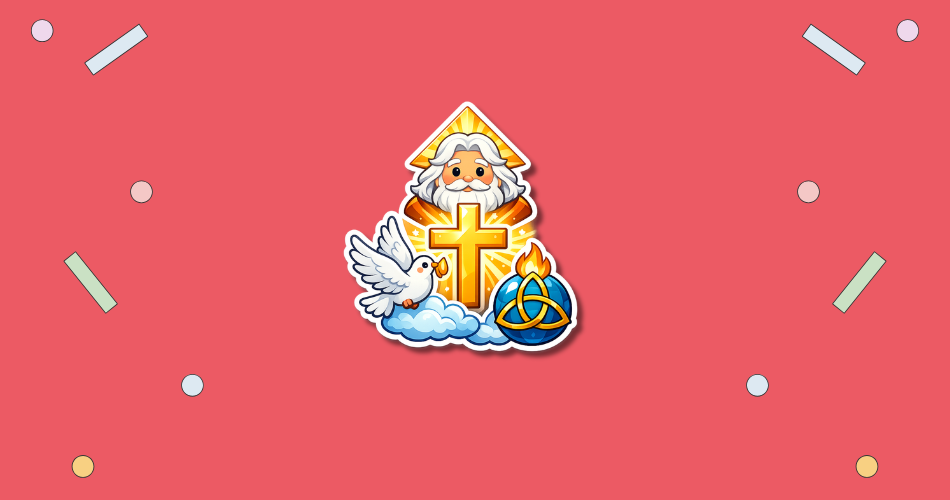
Trinity Sunday is observed in Western liturgical churches on the Sunday after Pentecost. In 2027, this date falls on May 23. It is a Christian feast focused on the doctrine of the Trinity: one God in three Persons, traditionally named Father, Son, and Holy Spirit. The day comes after the Easter season and Pentecost, giving churches a moment to reflect on the fullness of Christian teaching about God. Worship often includes prayers, hymns, Scripture readings, and sermons centered on the mystery of divine unity and relationship. 1 2 3 4 5
Contents
See also: Corpus Christi, Christmas, Easter, Whit Monday (Pentecost Monday)
HT Meter
Does this day matter to you?
Say that it does, and say whether you will be marking it. Both are anonymous to nobody but kind to everybody.
This day matters to me
0 Be the first to say so
Quietly remembered
0 Nobody has said so yet
Notes of remembrance
Join those marking this day to share a word, a memory, or the reason it matters to you.
These notes are kept for the people marking this day. Say you will be marking it to read them and to leave your own.
You have already shared a note here recently.
No notes yet. Yours would be the first.
History of Trinity Sunday
Trinity Sunday developed within the worship life of Western Christianity. The feast was being observed on the Sunday after Pentecost by at least the 10th century, especially in parts of northern Europe, before it became more widely established. In 1334, Pope John XXII approved the feast for the whole Western church, giving it a settled place in the liturgical calendar. Its position after Pentecost connects it with the Christian belief that God is revealed through the work of the Father, the Son, and the Holy Spirit.
Orthodox Pentecost Sunday
The day is not tied to a single event in the life of Jesus in the way Christmas, Easter, or Pentecost are. Instead, it centers on a doctrine that shapes Christian prayer, baptism, worship, and belief. In many churches, the day is marked with the color white and with readings that point to creation, grace, mission, and the love of God. Anglican, Lutheran, Catholic, Methodist, and other Western liturgical traditions continue to observe it as a day of theological reflection and praise.
Why is Trinity Sunday important?
Trinity Sunday matters because it focuses directly on one of the core teachings of Christian faith. The doctrine of the Trinity is not only an abstract idea for theologians; it shapes how Christians speak about God, pray, baptize, and understand salvation. The day gives churches room to slow down after the movement from Lent through Easter and Pentecost. It gathers those seasons into one act of worship centered on God’s life, love, and action.
The feast also gives Christian communities a way to think about unity without flattening difference. The language of Father, Son, and Holy Spirit points to relationship, communion, and shared divine life. For worshipers, that can deepen reflection on love, service, humility, and belonging. Trinity Sunday asks for reverence more than easy explanation, since the doctrine is traditionally understood as a mystery of faith rather than a puzzle to solve.
- It highlights a central Christian doctrine.
- It connects Easter, Pentecost, and Ordinary Time.
- It gives churches a focused day for teaching.
- It shapes prayer, baptism, and worship language.
- It invites reflection on unity and relationship.
How to Observe Trinity Sunday
Make it yours
How would you like to spend Trinity Sunday?
Tick what fits you, and we will put together ideas made for this day — not for any day.
Whit Sunday (Pentecost Sunday)
Attend a church service that follows the liturgical calendar, especially one with readings and music chosen for Trinity Sunday. Listen for how the prayers and hymns speak about the Father, Son, and Holy Spirit. Some congregations use the day to teach the meaning of baptismal language or to reflect on the closing words of Matthew’s Gospel. Families can also read a short passage together, such as Matthew 28:16-20 or 2 Corinthians 13:11-13, and talk about how those texts are used in worship.
A quieter observance can include prayer, study, or time with Christian art and music connected to the Trinity. Symbols such as the triangle, trefoil, triquetra, or Shield of the Trinity have been used in Christian teaching, though no symbol fully explains the doctrine. The day can also be a good time to revisit the meaning of the sign of the cross, the baptismal formula, or a familiar hymn such as “Holy, Holy, Holy.” Keep the tone thoughtful and reverent, with attention to worship rather than novelty.
- Attend a Trinity Sunday worship service.
- Read the appointed Scripture passages for the day.
- Study a historic Christian creed.
- Look at traditional symbols of the Trinity.
- Pray using Trinitarian language with care.
Trinity Sunday Dates
| Year | Date | Day of the week |
|---|---|---|
| 2026 | May 31 | Sunday |
| 2027 next | May 23 | Sunday |
| 2028 | June 11 | Sunday |
| 2029 | May 27 | Sunday |
| 2030 | June 16 | Sunday |


- https://www.usccb.org/resources/2026cal.pdf[↩]
- https://www.britannica.com/topic/Feast-of-the-Holy-Trinity[↩]
- https://www.umcdiscipleship.org/worship-planning/god-poured-out/trinity-sunday-year-a-planning-worship[↩]
- https://www.catholicculture.org/culture/liturgicalyear/calendar/day.cfm?date=2026-05-31[↩]
- https://www.liturgyoffice.org.uk/Calendar/2026/May.shtml[↩]