
Orthodox Pentecost Sunday
Orthodox Pentecost Sunday is observed on the seventh Sunday after Orthodox Easter. In 2027, this date falls on June 20. It is a major Christian feast in Eastern Orthodox tradition, centered on the descent of the Holy Spirit upon the disciples of Jesus. The day is also closely connected with the revelation of the Holy Trinity, which is why it is often called Trinity Sunday in Orthodox churches. Worship, Scripture readings, prayers, church greenery, and the transition from the Paschal season all shape the way the feast is observed. 1 2
Contents
HT Meter
Does this day matter to you?
Say that it does, and say whether you will be marking it. Both are anonymous to nobody but kind to everybody.
This day matters to me
0 Be the first to say so
Quietly remembered
0 Nobody has said so yet
Notes of remembrance
Join those marking this day to share a word, a memory, or the reason it matters to you.
These notes are kept for the people marking this day. Say you will be marking it to read them and to leave your own.
You have already shared a note here recently.
No notes yet. Yours would be the first.
See also: Whit Sunday (Pentecost Sunday), Orthodox Easter Monday, Orthodox Ascension Day, Orthodox Good Friday, Candlemas in the Eastern Orthodox Church
History of Orthodox Pentecost Sunday
Pentecost has roots in the biblical world, where the older feast was observed fifty days after Passover. In Christian tradition, Pentecost took on its central meaning through the account in Acts 2, when the Holy Spirit came upon the disciples and they began to proclaim the risen Christ. In the Orthodox Church, this event belongs to the Paschal cycle, following the resurrection of Christ and the feast of the Ascension. The feast is not treated simply as a historical anniversary, but as a liturgical proclamation of the Holy Spirit’s presence in the life of the Church.

Holy Spirit Monday
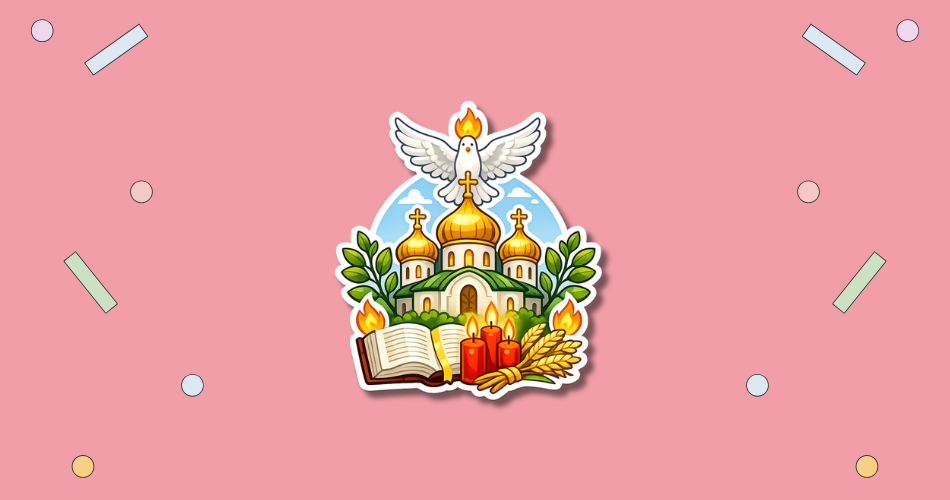
Orthodox Pentecost Sunday is also associated with Trinity Day because the feast brings together the Christian confession of Father, Son, and Holy Spirit. Churches may be decorated with green branches, leaves, and flowers, a sign of renewal and life. The evening service traditionally includes kneeling prayers, marking the return of kneeling after the Paschal season. The Monday after Pentecost is observed as the Day of the Holy Spirit in Orthodox tradition, and the following Sunday is the Sunday of All Saints.
Why is Orthodox Pentecost Sunday important?
Orthodox Pentecost Sunday matters because it marks one of the great turning points in the Christian liturgical year. The feast connects the resurrection of Christ with the gift of the Holy Spirit, showing how the Paschal message moves outward into preaching, worship, baptism, and the continuing life of the Church. For Orthodox Christians, Pentecost is not only about what happened to the first disciples, but also about the Spirit’s ongoing work among believers. Its prayers and hymns focus on renewal, unity, wisdom, and the life-giving presence of God.
The day also gives Orthodox communities a clear way to reflect on mission and belonging. The story of Pentecost emphasizes speech, understanding, courage, and witness across languages and peoples. Its connection with the Trinity gives the feast a deeply theological character, while its use of greenery gives it a visible and seasonal beauty. In many parishes, Pentecost feels both solemn and joyful, closing the Easter season while opening attention toward the daily work of Christian life.
- It honors the descent of the Holy Spirit.
- It closes the central arc of the Paschal season.
- It connects worship with the doctrine of the Trinity.
- It emphasizes unity across languages and communities.
- It reminds Orthodox Christians of renewal and spiritual life.
How to Observe Orthodox Pentecost Sunday
Make it yours
How would you like to spend Orthodox Pentecost Sunday?
Tick what fits you, and we will put together ideas made for this day — not for any day.

Whit Sunday (Pentecost Sunday)
Attend the Divine Liturgy if a local Orthodox parish is holding services, and pay attention to the hymns, readings, and prayers appointed for the feast. Many churches use green vestments, flowers, branches, or leaves, so the church itself may visually reflect the themes of life and renewal. Reading Acts 2 is a direct way to understand the biblical account behind the day. Those who are not Orthodox can still approach the feast respectfully by learning about its place in the Orthodox calendar and its connection with Pascha.
Families may use the day for quiet reflection, prayer, and conversation about the Holy Spirit in Christian belief. A simple home practice could include reading the Pentecost account, learning the meaning of Trinity Sunday, or looking at an Orthodox icon of Pentecost. Since the Monday after the feast is the Day of the Holy Spirit, the observance can also extend naturally into the following day. The most fitting tone is reverent, attentive, and grateful rather than casual or commercial.
- Read Acts 2 at home.
- Attend an Orthodox church service.
- Learn why the feast is called Trinity Sunday.
- Notice the green decorations used in many parishes.
- Spend time in prayer for wisdom and renewal.
Orthodox Pentecost Sunday Dates
| Year | Date | Day of the week |
|---|---|---|
| 2026 | May 31 | Sunday |
| 2027 next | June 20 | Sunday |
| 2028 | June 4 | Sunday |
| 2029 | May 27 | Sunday |
| 2030 | June 16 | Sunday |