
Holy Spirit Monday

Holy Spirit Monday is observed on the Monday after Orthodox Pentecost, 50 days after Orthodox Easter. In 2027, this date falls on June 21. It is a Christian feast in the Eastern Orthodox tradition, dedicated to honoring the Holy Spirit as the third person of the Holy Trinity. The day follows Pentecost Sunday, when Orthodox churches remember the descent of the Holy Spirit upon the apostles. In places where it is also a public or government holiday, the religious observance may be accompanied by church services, family gatherings, and a quieter pace after the Pentecost feast. 1 2
Contents
See also: Orthodox Ascension Day, Orthodox Good Friday, Orthodox Easter Monday, Orthodox Easter Day
HT Meter
Does this day matter to you?
Say that it does, and say whether you will be marking it. Both are anonymous to nobody but kind to everybody.
This day matters to me
0 Be the first to say so
Quietly remembered
0 Nobody has said so yet
Notes of remembrance
Join those marking this day to share a word, a memory, or the reason it matters to you.
These notes are kept for the people marking this day. Say you will be marking it to read them and to leave your own.
You have already shared a note here recently.
No notes yet. Yours would be the first.
History of Holy Spirit Monday
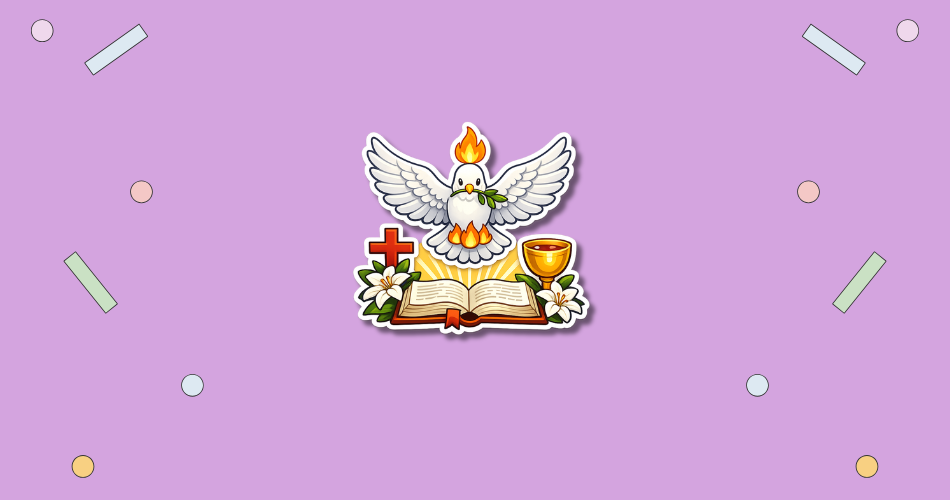
Holy Spirit Monday belongs to the Orthodox Pentecost cycle. Pentecost itself recalls the account in the Acts of the Apostles, where the disciples gathered in Jerusalem and received the Holy Spirit in a sign described as tongues of fire. The event is connected with the apostles beginning their public mission and preaching to people from many nations. In Orthodox worship, Pentecost is also closely tied to the revelation of the Holy Trinity: Father, Son, and Holy Spirit.

Orthodox Pentecost Sunday
The Monday after Pentecost gives special attention to the Holy Spirit. In Orthodox liturgical practice, the day after a major feast often honors the person most closely connected with the feast, and this day continues the Pentecost celebration by focusing on the Spirit’s presence and work in the Church. The services use many Pentecost themes, and the week is treated as a festive period. The observance is especially visible in Orthodox countries and communities, including Greece, Cyprus, Romania, Ukraine, and Orthodox parishes elsewhere.
Why is Holy Spirit Monday important?
Holy Spirit Monday is important because it keeps attention on the meaning of Pentecost beyond a single Sunday. The feast points to the belief that the Holy Spirit strengthens, guides, and sanctifies the Church. For Orthodox Christians, the day is not only about remembering a biblical event; it is also about recognizing the continuing presence of the Spirit in worship, prayer, and Christian life. That gives the observance a reflective and devotional tone.
The day also carries cultural importance in communities where Orthodox Christianity has shaped public calendars, family customs, and local identity. In Greece and some other Orthodox-majority countries, Pentecost Monday may affect schools, government offices, and working schedules. For believers, the observance connects theology with ordinary life: church attendance, hymns, icons, greenery, prayer, and time with family all help express the feast. Even for readers outside Orthodox tradition, the day offers a useful window into how Eastern Christianity marks the Easter season’s completion.
- It continues the celebration of Orthodox Pentecost.
- It honors the Holy Spirit in the life of the Church.
- It connects worship with the biblical account in Acts.
- It reflects the Orthodox understanding of the Holy Trinity.
- It remains part of public life in several Orthodox countries.
How to Observe Holy Spirit Monday
Make it yours
How would you like to spend Holy Spirit Monday?
Tick what fits you, and we will put together ideas made for this day — not for any day.
Whit Monday (Pentecost Monday)
Attend an Orthodox service if one is available, especially in a parish that keeps the Pentecost cycle with the Monday feast. Reading the second chapter of Acts can also give useful context for the day, since it describes the descent of the Holy Spirit and the apostles’ preaching. Some families mark the day with a meal after church or by visiting relatives, especially in communities where Pentecost Monday is a day off. A simple, respectful observance can include prayer, quiet reading, or learning about the iconography and hymns of Pentecost.
People who are not Orthodox can still approach the day with care and curiosity. Learning why greenery, flowers, and the language of renewal appear in Pentecost worship can make the observance easier to understand. In mixed-faith or multicultural settings, the day can also be a good reason to ask Orthodox friends or neighbors about their customs without assuming every community observes it the same way. The strongest approach is respectful attention to the feast’s religious meaning rather than treating it as only a long weekend.
- Read Acts 2 for the Pentecost account.
- Visit an Orthodox church calendar for local service times.
- Learn the meaning of Pentecost icons.
- Share a quiet meal with family after church.
- Ask about local customs with respect and patience.
Holy Spirit Monday Dates
| Year | Date | Day of the week |
|---|---|---|
| 2026 | June 1 | Monday |
| 2027 next | June 21 | Monday |
| 2028 | June 5 | Monday |
| 2029 | May 28 | Monday |
| 2030 | June 17 | Monday |