


Stand For Children Day
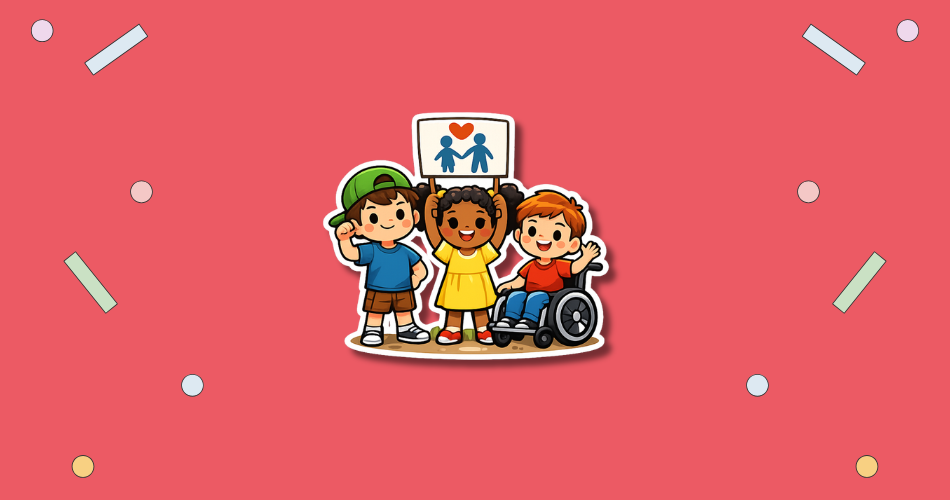
Stand For Children Day is observed every year on June 1. In 2027, this date falls on a Tuesday. The observance focuses on the needs, rights, health, safety, and education of children in the United States. It is especially connected with advocacy for children whose voices are often missing from policy debates. The day is not a federal holiday, but it is a useful date for parents, educators, community groups, and child advocates to focus public attention on what children need to grow, learn, and thrive. 1
Contents
See also: World Children’s Day (Universal Children’s Day), National Love Our Children Day, International Children’s Day, Children of Fallen Patriots Day
HT Meter
Does this day matter to you?
Say that it does, and say whether you will be marking it. Both are anonymous to nobody but kind to everybody.
This day matters to me
0 Be the first to say so
First voices
0 Nobody has said so yet
Notes of remembrance
Join those marking this day to share a word, a memory, or the reason it matters to you.
These notes are kept for the people marking this day. Say you will be marking it to read them and to leave your own.
You have already shared a note here recently.
No notes yet. Yours would be the first.
History of Stand For Children Day
Stand For Children Day grew out of a major children’s advocacy rally held at the Lincoln Memorial in Washington, D.C., on June 1, 1996. The event brought together thousands of families, faith leaders, civil rights leaders, educators, and child advocates calling for stronger public commitment to children’s well-being. Rosa Parks served as an honorary co-chair of the 1996 rally, and the gathering helped turn a single public demonstration into a broader movement focused on children’s needs. Follow-up Stand for Children events in later years focused on issues such as child health coverage, child care, and public education.

National Children’s Day
The observance is now mainly understood as a day for speaking up for children in practical ways. Its themes include access to strong schools, safe homes, health care, child care, books, playgrounds, and public policies that give children a fair start. Over time, Stand for Children as an organization has focused heavily on education advocacy and opportunities for students whose potential is often overlooked. The day keeps attention on the idea that children’s well-being is not only a family matter, but also a community and public responsibility.
Why is Stand For Children Day important?
Stand For Children Day matters because children are deeply affected by decisions they cannot vote on, fund, or write into law. School budgets, health coverage, housing stability, food access, child care, neighborhood safety, and family support all shape a child’s daily life. The day gives adults a clear reason to look beyond good intentions and ask what children in their own communities are actually missing. It also connects concern for children with civic action, not only private charity.
The observance is also important because childhood needs are connected. A child who is hungry may struggle to learn; a child without safe housing may have trouble attending school consistently; a child without health care may fall behind because treatable problems go unaddressed. Stand For Children Day frames these issues as shared responsibilities that require parents, schools, nonprofits, local leaders, and neighbors to work in the same direction. It encourages a broad view of child advocacy that includes both immediate help and long-term change.
- Children need adults to notice problems early.
- Strong schools depend on public attention and support.
- Health care and child care affect learning and stability.
- Local action can improve daily life for families.
- Listening to children helps adults make better choices.
How to Observe Stand For Children Day
Make it yours
How would you like to spend Stand For Children Day?
Tick what fits you, and we will put together ideas made for this day — not for any day.
National Love Our Children Day
Start with the needs closest to home. Ask a school, library, youth center, foster care agency, or family support organization what help would be useful, then respond with something specific. That might mean donating books, helping with a supply drive, volunteering as a tutor, supporting a local child care program, or contacting elected officials about school funding and youth services. The strongest observance is one that turns concern into a clear action for children and families.
The day can also be used for learning and conversation. Parents and teachers can talk with children about fairness, safety, health, and the right to be heard in age-appropriate ways. Community groups can host a discussion about local barriers facing children, especially families dealing with poverty, disability, language access, unstable housing, or limited transportation. Even a small action can be useful when it is grounded in respect for children’s real experiences instead of speaking over them.
- Donate new or gently used children’s books.
- Ask a school counselor what supplies are needed.
- Volunteer with a trusted youth-serving nonprofit.
- Write to a local official about child care or education.
- Talk with children about what helps them feel safe.
Stand For Children Day Dates
| Year | Date | Day of the week |
|---|---|---|
| 2026 | June 1 | Monday |
| 2027 next | June 1 | Tuesday |
| 2028 | June 1 | Thursday |
| 2029 | June 1 | Friday |
| 2030 | June 1 | Saturday |