


End of the Middle Ages Day
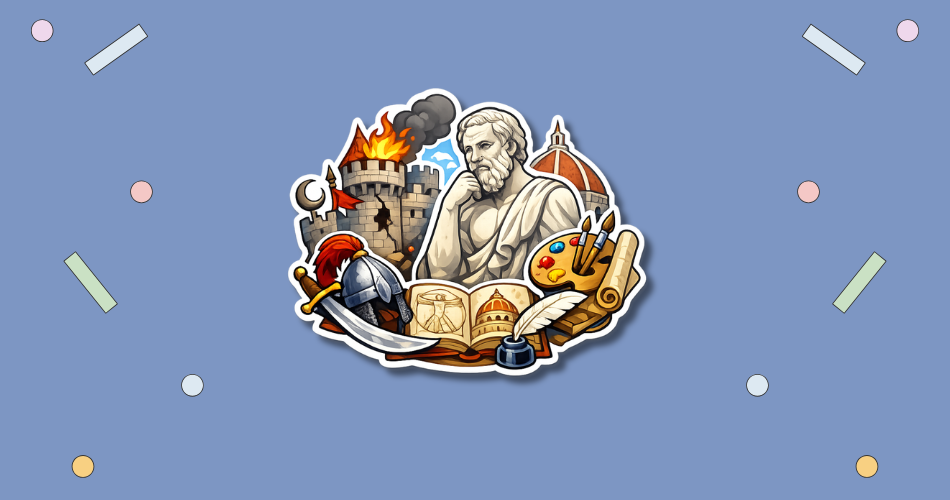
End of the Middle Ages Day is observed every year on May 29. In 2027, this date falls on a Saturday. The date points to May 29, 1453, when Constantinople fell to the Ottoman Empire and the Byzantine Empire came to an end. The observance is mainly educational, giving readers a reason to look at one of the best-known turning points between medieval and early modern history. It also invites a broader look at how historians divide the past, since the end of the Middle Ages was a gradual process rather than a single event everywhere in Europe. 1 2
Contents
See also: National Historic Marker Day
HT Meter
Does this day matter to you?
Say that it does, and say whether you will be marking it. Both are anonymous to nobody but kind to everybody.
This day matters to me
0 Be the first to say so
Quietly remembered
0 Nobody has said so yet
Notes of remembrance
Join those marking this day to share a word, a memory, or the reason it matters to you.
These notes are kept for the people marking this day. Say you will be marking it to read them and to leave your own.
You have already shared a note here recently.
No notes yet. Yours would be the first.
History of End of the Middle Ages Day
End of the Middle Ages Day is tied to the fall of Constantinople on May 29, 1453. Constantinople had been the capital of the Byzantine Empire, a continuation of the eastern Roman world, but by the 15th century the empire had shrunk sharply. Sultan Mehmed II led the Ottoman siege, using land and sea forces along with heavy cannon against the city’s defenses. When the city fell, Byzantine imperial rule ended, and Constantinople became a major Ottoman capital.
International Hug a Medievalist Day
The date is often treated as a symbolic dividing line because the fall of Constantinople affected politics, scholarship, trade, and military thinking. Greek scholars and manuscripts moved westward, adding to the study of classical learning in Italian cities and helping shape Renaissance humanism. Still, the Middle Ages did not end at the same moment for every region or every part of society. The day is best understood as a marker for a major transition, not as a claim that one morning instantly changed all of Europe.
Why is End of the Middle Ages Day important?
End of the Middle Ages Day matters because it makes a complicated historical shift easier to approach. The fall of Constantinople connects several large themes: the decline of Byzantine power, the rise of the Ottoman Empire, the changing role of artillery in warfare, and the movement of ideas across borders. A single date gives students and general readers a starting point for understanding how political and cultural eras are labeled. It also shows why historical period names are tools, not exact walls between one age and another.
The observance also helps correct the idea that the Middle Ages were only a period of stagnation. Medieval Europe, Byzantium, and the Islamic world all produced architecture, scholarship, trade networks, religious institutions, legal traditions, and technological change. Looking at the end of the period can lead to a more balanced view of what came before the Renaissance. It reminds readers that “medieval” history includes conflict and crisis, but also learning, craftsmanship, movement, and exchange.
- It connects a major military event with wider cultural change.
- It gives students a clear entry point into medieval history.
- It shows how historical periods can overlap and vary by region.
- It highlights the importance of Constantinople in world history.
- It supports a more thoughtful view of the Middle Ages.
How to Observe End of the Middle Ages Day
Make it yours
How would you like to spend End of the Middle Ages Day?
Tick what fits you, and we will put together ideas made for this day — not for any day.
Early Music Day
Read a short history of the fall of Constantinople, look up a map of the Byzantine and Ottoman worlds, or watch a lecture from a museum, university, or educational channel. A focused approach works better than trying to cover a thousand years of medieval history at once. Start with the siege of 1453, then follow one related thread, such as the Byzantine Empire, Ottoman expansion, Renaissance learning, medieval trade, or the use of gunpowder weapons. Families and classrooms can use the date for a simple timeline activity that compares 476, 1453, 1492, and other common turning points.
The day can also be used to question how history is organized. Ask why some historians choose 1453 as a symbolic ending while others prefer broader date ranges such as 500 to 1500. Visit a museum collection online, examine medieval art or architecture, or read about Hagia Sophia and its changing role through different empires. For a deeper activity, compare a medieval manuscript, a Renaissance painting, and an Ottoman-era building to see how different cultures preserved and transformed knowledge.
- Read about the siege of Constantinople in 1453.
- Study a map of the late Byzantine Empire.
- Compare different proposed end dates for the Middle Ages.
- Watch an educational video on medieval Europe or Byzantium.
- Visit a museum website with medieval or Byzantine collections.
End of the Middle Ages Day Dates
| Year | Date | Day of the week |
|---|---|---|
| 2026 | May 29 | Friday |
| 2027 next | May 29 | Saturday |
| 2028 | May 29 | Monday |
| 2029 | May 29 | Tuesday |
| 2030 | May 29 | Wednesday |