
National Meteor Watch Day
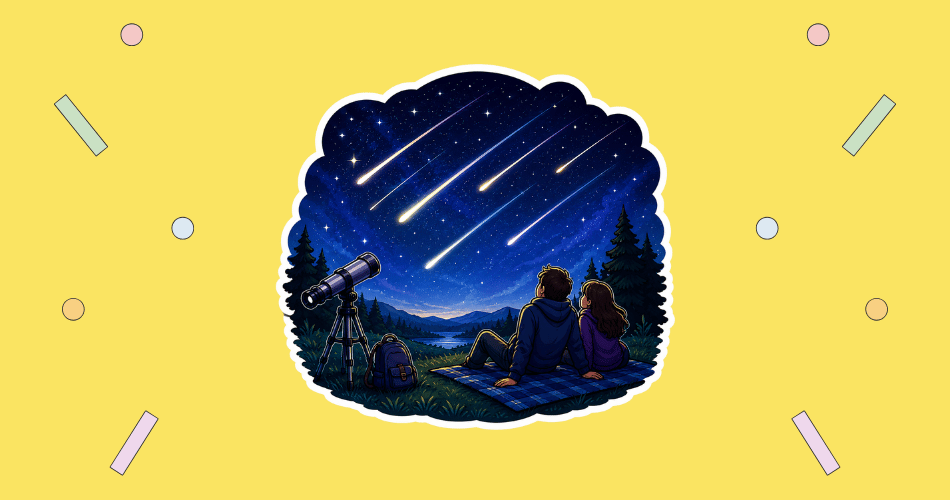
National Meteor Watch Day is observed every year on June 30. In 2027, this date falls on a Wednesday. This informal observance is all about looking up after dark and watching for meteors, the bright streaks often called shooting stars. It fits naturally into summer evenings, when many people can spend time outside with a blanket, a clear horizon, and a little patience. The day also gives families, students, and casual skywatchers an easy entry point into astronomy without needing special equipment. 1 2
Contents
See also: International Asteroid Day, National Look Up at the Sky Day, International Astronomy Day (Spring)
HT Meter
Does this day matter to you?
Tap the meter if it does, and say whether you will be celebrating — that is what opens the wishes from everybody else who will be.
This day matters to me
0 Be the first to say so
Just getting started
0 Let others know you’re in.
Wishes, greetings and stories
Join the celebration to share a wish, a greeting, or how this day goes in your house.
These are kept for the people celebrating this day. Say you will be celebrating to read them and to add your own.
You have already shared something here recently.
Nothing here yet. Yours would be the first.
History of National Meteor Watch Day
No single confirmed founder of National Meteor Watch Day is widely identified, and the observance appears to have developed as a modern calendar day focused on meteor watching. The date, June 30, also has a serious place in space history because it is the anniversary of the 1908 Tunguska event, when an object from space exploded over Siberia and flattened a vast area of forest. That event helped shape modern interest in asteroids, meteors, airbursts, and planetary defense. National Meteor Watch Day is lighter in tone, but it sits near that larger history of watching and studying objects that enter Earth’s atmosphere.

National Look Up at the Sky Day
Meteors have fascinated people for centuries because they are brief, surprising, and visible without a telescope. A meteoroid is a small piece of rock or dust in space; when it enters Earth’s atmosphere and burns brightly, it becomes a meteor. If any part reaches the ground, it is called a meteorite. Today, the day is mainly understood as a simple stargazing observance that connects curiosity, science, and the quiet pleasure of spending time under the night sky.
Why is National Meteor Watch Day important?
National Meteor Watch Day makes astronomy feel approachable. A person does not need a telescope, observatory, or advanced knowledge to enjoy the night sky; an open view and dark surroundings are usually enough. Looking for meteors also teaches patience because sightings can be uneven, with long quiet stretches followed by a sudden flash. That slow pace can be a welcome break from bright screens and constant noise.
The day also points to real science. Meteor showers happen when Earth moves through trails of dust and debris left by comets or asteroids, and those tiny particles can create dramatic streaks of light high above the ground. Learning the difference between meteoroids, meteors, and meteorites helps people understand space vocabulary that is often mixed together in everyday speech. It also draws attention to dark skies, light pollution, and the value of being able to see natural celestial events from where people live.
- It makes astronomy easy for beginners.
- Children can learn sky science by watching.
- Darker skies help reveal more meteors.
- Meteor watching rewards patience and attention.
- The night sky becomes a shared experience.
How to Celebrate National Meteor Watch Day
Make it yours
How would you like to spend National Meteor Watch Day?
Tick what fits you, and we will put together ideas made for this day — not for any day.

International Asteroid Day
Choose a safe, open place away from bright streetlights and give the sky enough time to become fully dark. A backyard, rural field, campground, lakeshore, or park can work well if the horizon is clear and local rules allow evening access. Bring a blanket or reclining chair so the whole sky is easier to scan without neck strain. Meteors can appear in many parts of the sky, so it is better to look broadly than to stare at one narrow spot.
Make the evening comfortable enough to last. Bring layers, water, simple snacks, and a dim red light instead of a bright phone screen. Give eyes at least 20 minutes to adjust to the darkness, and avoid checking bright devices once watching begins. Families can turn the night into a quiet learning activity by reviewing the meanings of meteor, meteoroid, and meteorite before heading outside.
- Check the local forecast before going out.
- Pick a spot with little light pollution.
- Let your eyes adjust before judging visibility.
- Watch from a blanket or reclining chair.
- Keep phones dim and pointed away.
National Meteor Watch Day Dates
| Year | Date | Day of the week |
|---|---|---|
| 2026 | June 30 | Tuesday |
| 2027 next | June 30 | Wednesday |
| 2028 | June 30 | Friday |
| 2029 | June 30 | Saturday |
| 2030 | June 30 | Sunday |