
International Astronomy Day (Spring)
International Astronomy Day (Spring Astronomy Day) is observed on a Saturday between mid-April and mid-May on or near the first quarter Moon. In 2026, it falls on April 25. This celebration is part of a bi-annual event, with a second observance held in the fall, designed to bridge the gap between the general public and the astronomical community. By scheduling the event near a first quarter Moon, organizers ensure the moon is visible in the afternoon and evening, providing clear views of craters and mountains through telescopes.
Contents
See also: Sun-Earth Day, Earth’s Rotation Day, Earth at Perihelion, National Look Up at the Sky Day
HT Meter
Does this day matter to you?
Tap the meter if it does, and say whether you will be celebrating — that is what opens the wishes from everybody else who will be.
This day matters to me
0 Be the first to say so
Just getting started
0 Let others know you’re in.
Wishes, greetings and stories
Join the celebration to share a wish, a greeting, or how this day goes in your house.
These are kept for the people celebrating this day. Say you will be celebrating to read them and to add your own.
You have already shared something here recently.
Nothing here yet. Yours would be the first.
History of International Astronomy Day
The holiday was established in 1973 by Doug Berger, who served as the president of the Astronomical Association of Northern California. Rather than expecting the public to travel to remote observatories located on dark mountaintops, Berger’s philosophy was to “bring astronomy to the people.” He began setting up portable telescopes in high-traffic urban areas, such as shopping malls, parks, and street corners, to allow passersby to experience the wonders of the cosmos firsthand.

International Day of Planetariums
What started as a local initiative quickly expanded into a national and eventually international grassroots movement. The Astronomical League now coordinates the event globally, providing resources for local clubs and science centers. In 2007, the organization added a second celebration in the autumn to provide more opportunities for outreach and to account for different seasonal sky configurations in various parts of the world. Today, hundreds of thousands of people participate in events hosted by planetariums, museums, and amateur astronomy clubs.
Why is International Astronomy Day important?
This day serves as a critical educational tool for promoting scientific literacy and curiosity about the universe. By providing free access to high-quality telescopes and expert knowledge, the holiday removes the financial and geographical barriers that often prevent people from engaging with space science. It encourages the next generation of scientists and engineers by offering children a tangible connection to the celestial objects they usually only see in textbooks or on screens.
Beyond education, the day highlights the importance of dark sky preservation and the growing issue of light pollution. As urban areas expand, the ability to see the Milky Way or distant stars diminishes, affecting both astronomical research and biological rhythms. International Astronomy Day provides a platform for advocates to demonstrate what is being lost and to teach the public how responsible lighting choices can help restore the natural beauty of the night sky for everyone.
- Viewing the Moon’s craters through a telescope fosters a sense of perspective.
- The event highlights the collaborative nature of amateur and professional astronomy.
- Public stargazing sessions promote community engagement in local parks and squares.
- It raises awareness about the environmental impact of excessive artificial light.
- Science centers use the day to debut new exhibits and astronomical technologies.
How to Celebrate International Astronomy Day
Make it yours
How would you like to spend International Astronomy Day (Spring Astronomy Day)?
Tick what fits you, and we will put together ideas made for this day — not for any day.

International Astrology Day
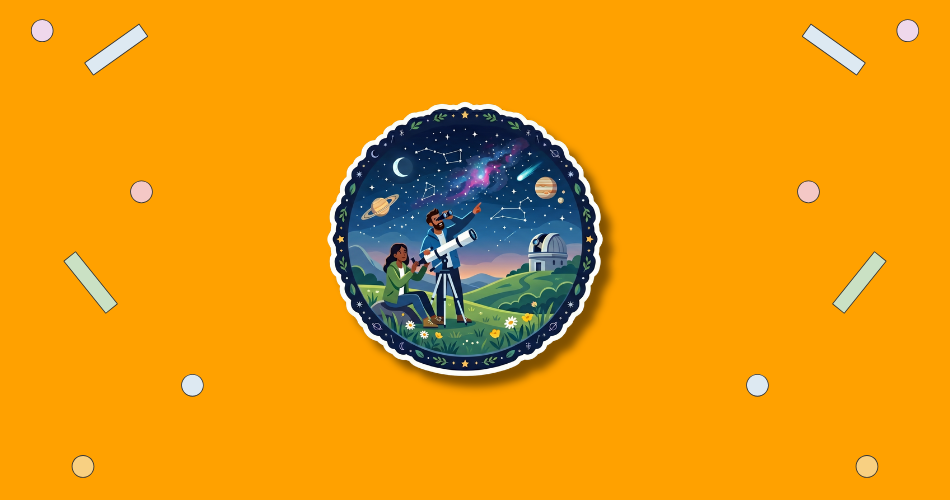
The most direct way to observe this holiday is to attend a local “star party” or observatory open house. These events are typically free and offer the chance to look through various types of telescopes at the Moon, visible planets like Venus or Mars, and bright star clusters. Many planetariums also schedule special shows or guest lectures by astronomers to explain current space missions and recent discoveries. If no formal event is nearby, you can simply take a pair of binoculars to a dark spot in your backyard to scan the lunar terminator line.
For those celebrating at home, utilizing mobile apps to identify constellations and satellites provides an interactive experience. Building a simple scale model of the solar system or crafting a pinhole constellation viewer are effective ways to engage children in the mechanics of space. Many people also use the day to advocate for better lighting ordinances in their neighborhoods, such as installing motion sensors or shielded light fixtures. Sharing astronomical photography or interesting facts about the galaxy on digital platforms further supports the goal of bringing astronomy to a wider audience.
- Visit a local science museum to see a live planetarium presentation.
- Download a sky-mapping app to identify the stars currently visible above you.
- Turn off unnecessary outdoor lights to reduce local light pollution.
- Use binoculars to observe the shadows and textures of the Moon’s surface.
- Join an amateur astronomy club to learn more about telescope maintenance.
❓️ Astronomy Quiz
International Astronomy Day Dates Table
| Year | Date | Day of the week |
|---|---|---|
| 2026 | April 25 | Saturday |
| 2027 next | May 8 | Saturday |