



Tamil New Year
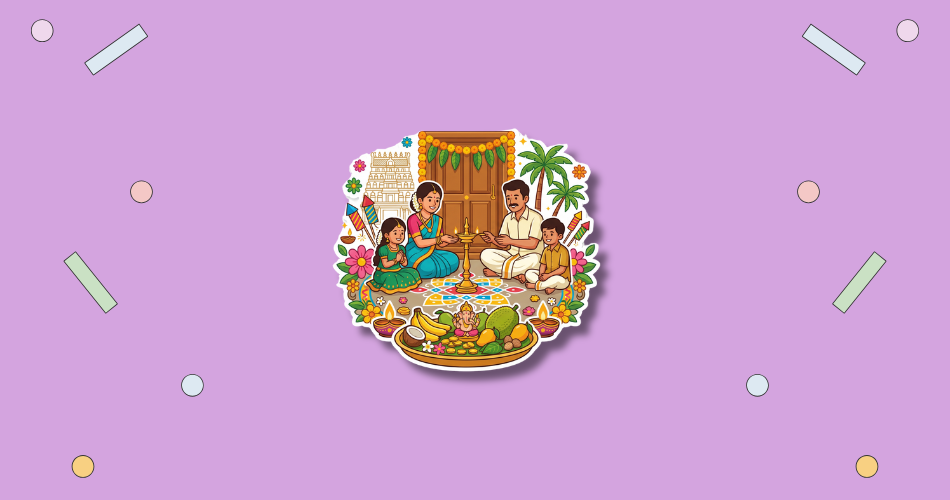
Tamil New Year, also known as Puthandu, is the celebration of the first day of the Tamil calendar and is observed on the first day of the Tamil month Chithirai, usually falling on April 14. This festival marks a time of new beginnings and prosperity for Tamil communities in India, Sri Lanka, Malaysia, Singapore, and throughout the global diaspora.
Contents
Read also about Cambodian New Year, Theravada New Year, Aztec New Year,Mahayana New Year, Chinese New Year,Orthodox New Year
HT Meter
Does this day matter to you?
Tap the meter if it does, and say whether you will be celebrating — that is what opens the wishes from everybody else who will be.
This day matters to me
0 Be the first to say so
Just getting started
0 Let others know you’re in.
Wishes, greetings and stories
Join the celebration to share a wish, a greeting, or how this day goes in your house.
These are kept for the people celebrating this day. Say you will be celebrating to read them and to add your own.
You have already shared something here recently.
Nothing here yet. Yours would be the first.
History of Tamil New Year
The origins of Puthandu are deeply rooted in the solar cycle of the Hindu calendar. Traditionally, the new year is believed to occur when the sun enters the first sign of the zodiac, Aries, which historically coincides with the spring equinox. Ancient Tamil literature and astronomical texts describe this period as the time when the sun is directly above the equator, signaling the start of a new agricultural and spiritual cycle. According to religious legend, this is also the day when Lord Brahma, the creator, began his work on the universe.
Theravada New Year
Over the centuries, the festival has evolved into a rich tapestry of cultural and religious traditions. It is a day associated with Lord Indra, the king of the gods, who is said to have visited Earth on this date to ensure peace and harmony among humanity. While there have been historical debates regarding the official start date of the Tamil year, the 14th of April remains the most widely recognized and celebrated date. The day is treated as a public holiday in several countries, reflecting its significance as a pillar of Tamil cultural identity and heritage.
Why is Tamil New Year important?
This day is significant because it emphasizes the concept of balance and the acceptance of life’s varied experiences. A central theme of the holiday is the “Arusuvai” or six tastes—sweet, sour, bitter, salty, pungent, and astringent. By incorporating all these flavors into the traditional new year meal, participants acknowledge that the coming year will bring a mix of joy, sorrow, surprises, and challenges. This philosophical approach helps individuals develop resilience and a positive outlook for the future.
Puthandu also serves as an important social anchor for the Tamil community, fostering family unity and cultural continuity. It is a time for cleaning the home and clearing out the old to make way for new opportunities. The rituals performed on this day, such as viewing auspicious items at dawn, are intended to set a tone of abundance and success for the next twelve months. By observing these customs, younger generations connect with their ancestral roots and carry forward the values of gratitude and spiritual devotion.
- It marks the beginning of the traditional Tamil solar calendar.
- The festival celebrates the arrival of spring and the renewal of nature.
- It promotes the cultural value of viewing life as a blend of different emotions.
- Families strengthen their social bonds through shared meals and gift-giving.
- The day provides an opportunity for spiritual reflection and temple visits.
How to Celebrate Tamil New Year
Make it yours
How would you like to spend Tamil New Year?
Tick what fits you, and we will put together ideas made for this day — not for any day.
Chinese New Year
Celebrating Puthandu begins on the eve of the festival with the arrangement of the “Kanni,” an auspicious tray placed in front of a mirror. This tray typically contains gold and silver jewelry, coins, tropical fruits like mangoes and jackfruit, betel leaves, and vibrant flowers. Family members observe the “Kanni” as their first sight upon waking on New Year’s Day, a practice believed to ensure a year of prosperity. Homes are also decorated with intricate “kolam” designs made of rice flour at the entrance to welcome the goddess of wealth.
Traditional food plays a central role in the observance, specifically the preparation of “Mangai Pachadi.” This dish is made from raw mango, jaggery, and neem flowers to represent the bitter and sweet aspects of life. Families often wear new traditional clothing and visit local temples to offer prayers and listen to the reading of the “Panchangam,” or the traditional almanac. The atmosphere in Tamil neighborhoods is one of festive joy, filled with the sounds of traditional music and the exchange of the greeting “Puthandu Vazthukal,” wishing others a happy new year.
- Arrange a tray of fruits, money, and flowers to be the first thing you see at dawn.
- Prepare and share Mangai Pachadi to symbolize life’s diverse experiences.
- Draw a fresh kolam design using rice flour at the front door of your home.
- Visit a temple to seek blessings and listen to the year’s astrological forecast.
- Exchange gifts and new clothes with family members to mark a fresh start.
Tamil New Year Dates Table
| Year | Date | Day of the week |
|---|---|---|
| 2026 | April 14 | Tuesday |