


World Chagas Disease Day
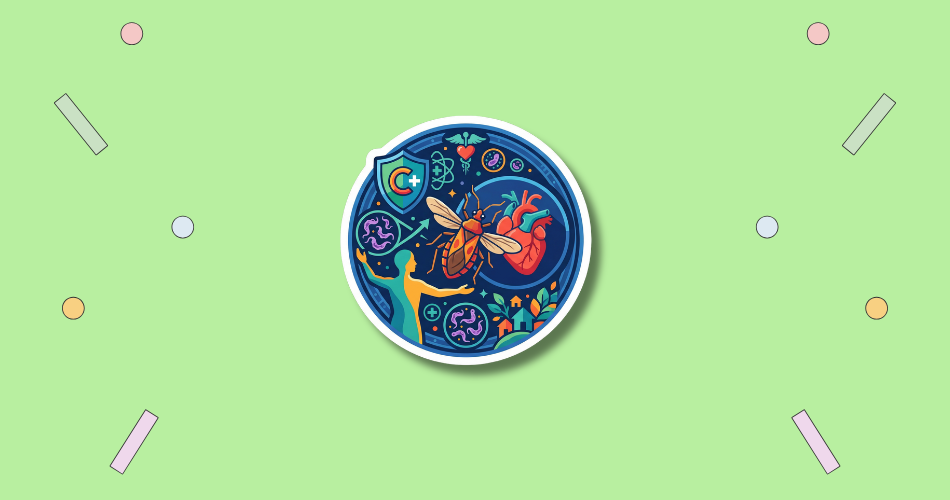
World Chagas Disease Day is an annual global health observance dedicated to raising awareness about American trypanosomiasis and is observed on April 14. In 2027, this date falls on a Wednesday. The day highlights the struggle of people living with this neglected tropical disease and emphasizes the need for early diagnosis and universal access to healthcare to prevent complications and fatalities.
Contents
HT Meter
Does this day matter to you?
Say that it does, and say whether you will be marking it. Both are anonymous to nobody but kind to everybody.
This day matters to me
0 Be the first to say so
Quietly remembered
0 Nobody has said so yet
Notes of remembrance
Join those marking this day to share a word, a memory, or the reason it matters to you.
These notes are kept for the people marking this day. Say you will be marking it to read them and to leave your own.
You have already shared a note here recently.
No notes yet. Yours would be the first.
Read also about World Malaria Day
History of World Chagas Disease Day
The date was chosen to commemorate the day in 1909 when Brazilian physician Carlos Ribeiro Justiniano Chagas diagnosed the first human case of the disease. The patient was a young girl named Berenice Soares de Moura. Dr. Chagas made an extraordinary contribution to tropical medicine by identifying not only the disease but also the parasite, Trypanosoma cruzi, and the insect vector known as triatomine bugs. Despite its early discovery, the disease remained largely overlooked by the international medical community for over a century, affecting mostly impoverished rural populations.
World Malaria Day
Formal global recognition of the day began in 2019 during the 72nd World Health Assembly. The proposal for an official day was led by the International Federation of Associations of People Affected by Chagas Disease and received support from numerous health organizations and research centers. The first official World Chagas Disease Day was observed on April 14, 2020. This designation placed the condition alongside other major global health campaigns, ensuring that the “silent and silenced” illness would receive the international attention necessary to drive research and funding. 1
Why is World Chagas Disease Day important?
This day is vital because Chagas disease is often asymptomatic in its early stages, earning it the reputation of a silent killer. Millions of people are infected worldwide, but many are unaware of their status until severe cardiac or digestive complications arise decades later. Raising awareness encourages people in endemic regions to seek testing, allowing for medical intervention during the acute phase when the infection is most treatable. It also serves to educate healthcare providers in non-endemic countries about the risks associated with migration and blood transfusions.
The observance also advocates for the rights of marginalized communities who disproportionately bear the burden of the disease. Because it primarily affects those living in poor housing conditions where triatomine bugs thrive, Chagas is a disease of inequality. The day calls for increased vector control measures, such as insecticide spraying and housing improvements, to break the cycle of transmission. By bringing the disease into the spotlight, the World Health Organization and its partners aim to eliminate mother-to-child transmission and ensure that those affected receive dignified care.
- It sheds light on a disease that affects up to 7 million people globally.
- The day promotes the inclusion of Chagas screening in primary healthcare systems.
- International attention helps secure funding for the development of new treatments.
- It raises awareness of transmission methods including foodborne and congenital routes.
- Communities use the day to combat the social stigma often faced by infected individuals.
How to Observe World Chagas Disease Day
Make it yours
How would you like to spend World Chagas Disease Day?
Tick what fits you, and we will put together ideas made for this day — not for any day.
World Mosquito Day
Observing this day involves participating in educational webinars and public health campaigns that explain the symptoms and transmission of the disease. Many universities and hospitals host lectures that focus on the latest research in parasitology and tropical medicine. In regions where the disease is endemic, health clinics often provide free or discounted screening services to encourage early detection. For the general public, observing the day means sharing information to help others recognize the risks associated with “kissing bugs” and contaminated food.
Practical observation also includes supporting the efforts of non-profit organizations dedicated to neglected tropical diseases. This can be done by participating in social media campaigns using official hashtags to amplify the voices of patients and advocates. People can also take the time to learn about the environmental factors that contribute to the spread of the disease, such as deforestation and climate change. The focus is on a proactive approach to health that emphasizes that Chagas is preventable and treatable with the right resources and public awareness.
- Watch educational documentaries about the life cycle of the Trypanosoma cruzi parasite.
- Share graphics and facts from the World Health Organization to raise online awareness.
- Support charities that provide insecticide-treated bed nets to vulnerable communities.
- Attend a virtual conference featuring survivors and medical researchers.
- Check with local blood banks to learn about their screening protocols for tropical diseases.
World Chagas Disease Day Dates Table
| Year | Date | Day of the week |
|---|---|---|
| 2026 | April 14 | Tuesday |
| 2027 next | April 14 | Wednesday |
| 2028 | April 14 | Friday |
| 2029 | April 14 | Saturday |
| 2030 | April 14 | Sunday |