
Apple II Day
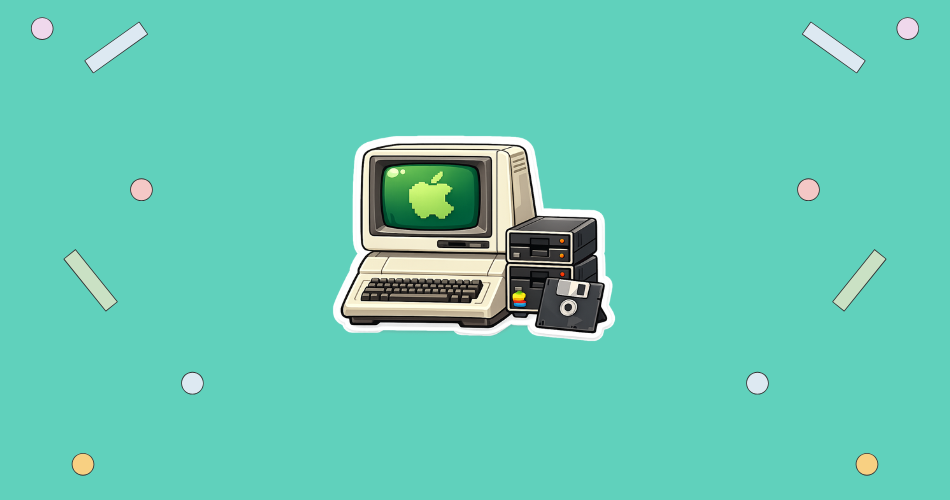
Apple II Day is observed every year on June 5. In 2027, this date falls on a Saturday. The day recognizes the Apple II, one of the best-known early personal computers and a major part of the rise of home, school, and small-business computing. It is an informal technology observance, not a public holiday, and it is best suited to retrocomputing fans, educators, programmers, collectors, and anyone interested in how personal computers became everyday tools. The date is connected with the Apple II’s 1977 release history and the lasting affection many users still have for the machine. 1
Contents
See also: Autonomous Vehicle Day, Macintosh Computer Day, ENIAC Day (World Computer Day)
HT Meter
Does this day matter to you?
Tap the meter if it does, and say whether you will be celebrating — that is what opens the wishes from everybody else who will be.
This day matters to me
0 Be the first to say so
Just getting started
0 Let others know you’re in.
Wishes, greetings and stories
Join the celebration to share a wish, a greeting, or how this day goes in your house.
These are kept for the people celebrating this day. Say you will be celebrating to read them and to add your own.
You have already shared something here recently.
Nothing here yet. Yours would be the first.
History of Apple II Day
The modern observance centers on the Apple II computer rather than on a formally documented founder or sponsoring organization. The Apple II was designed by Steve Wozniak in 1977 and built as a more complete consumer product than the earlier Apple I. It combined a keyboard, electronics, power supply, color graphics capability, expansion slots, and built-in BASIC in a package that ordinary buyers could use with a display. That combination helped move personal computing beyond hobbyist kits and into homes, classrooms, and offices.
Macintosh Computer Day
The Apple II’s importance grew with practical hardware and software additions. The Disk II floppy drive made saving and loading programs faster and more reliable than cassette storage, while VisiCalc, released for the Apple II in 1979, became a major business application. Schools, families, programmers, and small businesses used the machine for games, writing, spreadsheets, learning BASIC, and experimenting with add-on cards. Today, Apple II Day is mainly a chance to look back at a computer that helped make digital literacy feel approachable.
Why is Apple II Day important?
Apple II Day matters because the Apple II represents a turning point in how people experienced computers. Instead of treating computing as something reserved for laboratories, corporations, or expert hobbyists, the machine showed that a personal computer could sit on a desk at home or in a classroom. Its expansion slots also made it flexible, allowing users and companies to build new uses around the same basic system. That openness helped create a lively software and hardware ecosystem.
The day also has educational value. Many people first learned programming, word processing, spreadsheets, or computer games on an Apple II or one of its later models. Remembering the machine helps explain why early personal computers were not just consumer products but learning environments. They invited users to type commands, read manuals, swap disks, repair parts, and understand the relationship between hardware and software.
- It honors a milestone in personal computing.
- It connects retrocomputing fans with shared history.
- It highlights early computer education.
- It keeps vintage hardware knowledge alive.
- It shows how simple tools can shape culture.
How to Celebrate Apple II Day
Make it yours
How would you like to spend Apple II Day?
Tick what fits you, and we will put together ideas made for this day — not for any day.

National Apple Day
Set aside time to explore the Apple II in a hands-on way. Owners of working hardware can boot a favorite disk, clean a keyboard carefully, test an old monitor, or organize software and manuals. Readers without vintage equipment can use an emulator, watch a restoration video, or try a BASIC program that shows how early users interacted with the machine. A classroom or club can compare the Apple II’s memory, graphics, and storage with modern devices to make computing history easier to understand.
Apple II Day also works well as a small research or storytelling project. Ask longtime computer users what machines they first used, look up early Apple II games and productivity software, or read about how VisiCalc changed the value of personal computers for business. Collectors can document a machine’s serial number, photograph accessories, or write down family memories connected with school computer labs and home computing. The point is not nostalgia alone; it is learning how practical, approachable design helped bring computers into daily life.
- Run an Apple II emulator.
- Type a short BASIC program.
- Read about VisiCalc and Disk II.
- Share a photo of vintage hardware.
- Visit a computer history collection online.
Apple II Day Dates
| Year | Date | Day of the week |
|---|---|---|
| 2026 | June 5 | Friday |
| 2027 next | June 5 | Saturday |
| 2028 | June 5 | Monday |
| 2029 | June 5 | Tuesday |
| 2030 | June 5 | Wednesday |


Cook it
Make something for Apple II Day
Tell us what you feel like making and what you have to work with, and we will write one recipe for it.