
Philippine Republic Day

Philippine Republic Day is observed every year on July 4. In 2027, this date falls on a Sunday. The day marks the date in 1946 when the United States recognized the Republic of the Philippines as an independent state and renounced sovereignty over the islands. It is a historical observance connected with the birth of the modern Philippine republic after World War II. Today, July 4 is also linked with Philippine-American Friendship Day, which places attention on the long and complicated relationship between the Philippines and the United States. 1
Contents
See also: Philippine Air Force Day, First Philippine Republic Day, Philippines Independence Day
HT Meter
Does this day matter to you?
Say that it does, and say whether you will be marking it. Both are anonymous to nobody but kind to everybody.
This day matters to me
0 Be the first to say so
Quietly remembered
0 Nobody has said so yet
Notes of remembrance
Join those marking this day to share a word, a memory, or the reason it matters to you.
These notes are kept for the people marking this day. Say you will be marking it to read them and to leave your own.
You have already shared a note here recently.
No notes yet. Yours would be the first.
History of Philippine Republic Day
July 4, 1946, was the day the United States formally recognized the independence of the Republic of the Philippines. On that date, the two governments signed the Treaty of General Relations, often called the Treaty of Manila, ending American sovereignty over the Philippines. The date was originally observed as Philippine Independence Day, reflecting the legal transfer of sovereignty after decades of American rule. For many Filipinos, however, the earlier declaration of independence from Spain on June 12, 1898, remained an essential part of the national story.

Filipino-American Friendship Day
That tension shaped the later meaning of July 4. In 1962, President Diosdado Macapagal moved the public observance of Philippine Independence Day to June 12, honoring the 1898 declaration in Kawit, Cavite. In 1964, Republic Act No. 4166 made June 12 the official Independence Day and declared July 4 Philippine Republic Day. The date later became associated with Philippine-American Friendship Day, shifting emphasis from national independence alone to the historical, diplomatic, and cultural ties between the two countries.
Why is Philippine Republic Day important?
Philippine Republic Day matters because it points to a specific legal and political milestone in the country’s modern history. June 12 honors the 1898 declaration of independence from Spain, while July 4 marks international recognition by the United States in 1946 after the colonial period and the destruction of World War II. Both dates help explain why Philippine independence is remembered through more than one historical lens. The July observance gives space to examine the end of American sovereignty and the formal beginning of the independent Republic of the Philippines.
The day also invites a clear look at friendship, power, and memory. Philippine-American relations include military alliance, migration, education, trade, shared wartime history, and difficult debates over colonial rule. Remembering July 4 honestly means recognizing both the independence ceremony of 1946 and the unequal conditions that shaped the postwar relationship. That balanced view makes the observance useful for students, families, Filipino communities abroad, and anyone learning about the country’s path to sovereignty.
- It marks the formal recognition of Philippine independence in 1946.
- It helps explain why June 12 is now Independence Day.
- It connects Philippine history with the aftermath of World War II.
- It adds context to Philippine-American relations.
- It encourages careful learning about sovereignty and national memory.
How to Observe Philippine Republic Day
Make it yours
How would you like to spend Philippines Republic Day?
Tick what fits you, and we will put together ideas made for this day — not for any day.
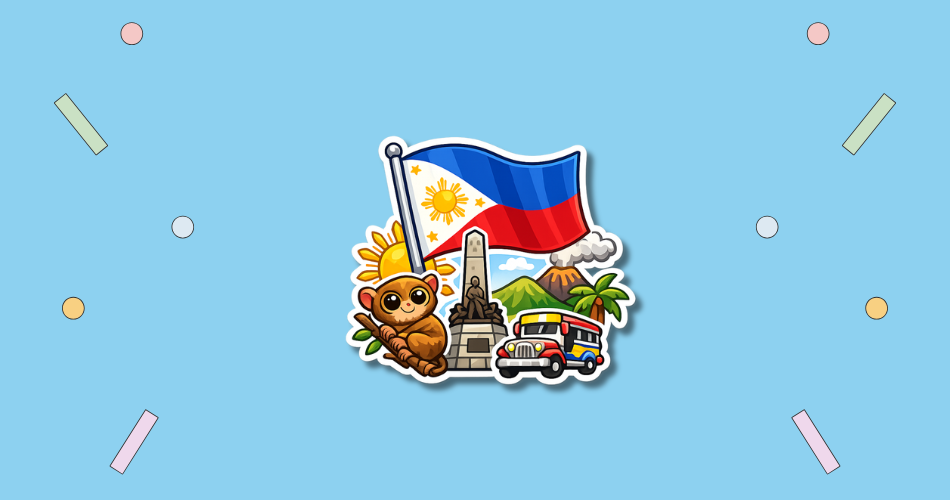
Philippines Independence Day
Read about the 1946 Treaty of Manila, the 1898 declaration of independence, and the law that moved Independence Day to June 12. A short family or classroom discussion can help separate the meanings of the two dates without treating them as rivals. Filipino communities may use the day to share historical exhibits, lectures, flag displays, cultural programs, or conversations about migration and identity. The most useful observances focus on accuracy, respect, and a fuller understanding of the country’s independence story.
The day can also be marked through cultural and community connection. Learn about Filipino veterans of World War II, the rebuilding of the Philippines after the war, or the lives of Filipinos who migrated to the United States after independence. Watch a documentary, read a Philippine history essay, or visit a museum collection that explains the transition from colony to republic. For Filipino-American families, July 4 can be a thoughtful moment to talk about heritage, citizenship, language, and the ties that cross the Pacific.
- Read the text or summary of Republic Act No. 4166.
- Compare the meanings of June 12 and July 4.
- Learn about the Treaty of Manila in 1946.
- Share a Filipino history resource with a younger reader.
- Talk with relatives about family migration or wartime memories.
Philippine Republic Day Dates
| Year | Date | Day |
|---|---|---|
| 2026 | July 4 | Saturday |
| 2027 | July 4 | Sunday |
| 2028 | July 4 | Tuesday |
| 2029 | July 4 | Wednesday |
| 2030 | July 4 | Thursday |