
Sierra Leone Independence Day
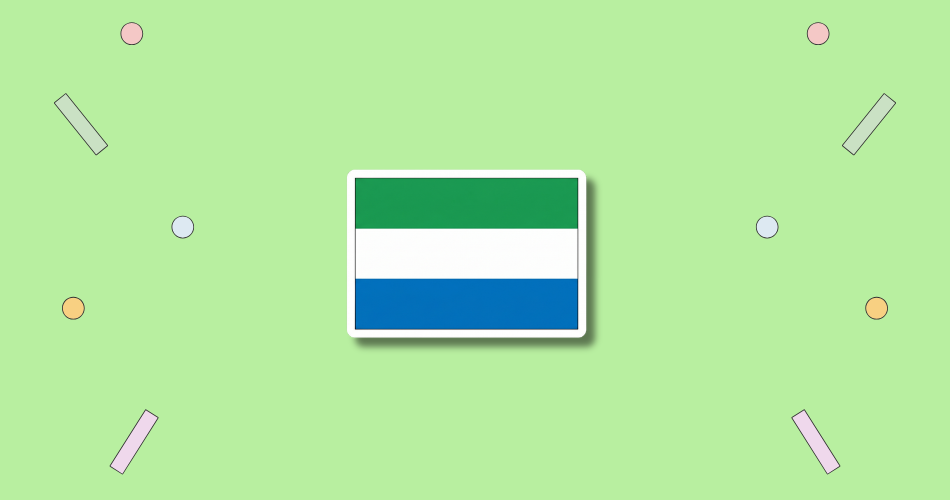
Sierra Leone Independence Day is celebrated on April 27. This primary national holiday commemorates the country’s official transition to an independent sovereign state in 1961, marking the end of over 150 years of British colonial rule. The day serves as a powerful symbol of national pride, unity, and resilience, honoring the peaceful negotiation process that led to self-determination. It is a time for the people of Sierra Leone to reflect on their rich history—from the 18th-century establishment of Freetown as a haven for liberated slaves to the modern-day efforts toward building a cohesive and prosperous republic. Citizens across the nation and in the global diaspora use this occasion to celebrate their shared heritage and to reaffirm their commitment to the democratic ideals of liberty and equality. In 2027, this date falls on a Tuesday.
Contents
HT Meter
Does this day matter to you?
Tap the meter if it does, and say whether you will be celebrating — that is what opens the wishes from everybody else who will be.
This day matters to me
0 Be the first to say so
Just getting started
0 Let others know you’re in.
Wishes, greetings and stories
Join the celebration to share a wish, a greeting, or how this day goes in your house.
These are kept for the people celebrating this day. Say you will be celebrating to read them and to add your own.
You have already shared something here recently.
Nothing here yet. Yours would be the first.
See also: Independence Day in Zimbabwe, Mauritius Independence Day, Ghana Independence Day
History of Sierra Leone Independence Day
The history of Sierra Leone is uniquely tied to the abolitionist movement. In 1787, British philanthropists established Freetown as a settlement for “Black Poor” from London and later for liberated American slaves following the American War of Independence. By 1808, the coastal area became a British Crown Colony, serving as a base for the Royal Navy’s West Africa Squadron to enforce the ban on the Atlantic slave trade. Over the 19th century, British influence expanded inland, eventually establishing a protectorate over the hinterland in 1896.
Liberia Independence Day
The movement for self-rule intensified after World War II, led by the Sierra Leone People’s Party (SLPP) and its leader, Sir Milton Margai. Unlike many other independence movements in Africa, Sierra Leone’s path was characterized by peaceful constitutional discussions. Following a series of conferences at Lancaster House in London in 1960, an agreement was reached for full sovereignty. At midnight on April 27, 1961, the green, white, and blue national flag was unfurled at Brookfields Playground in Freetown, and Sir Milton Margai was sworn in as the nation’s first Prime Minister.
Why is Sierra Leone Independence Day important?
This day is vital because it recognizes the restoration of dignity and the right to self-governance for millions of people. It honors the “fallen heroes” and political pioneers who advocated for a unified nation that merged the coastal Colony and the inland Protectorate. By celebrating this anniversary, the country reinforces its identity as a constitutional republic, reminding its citizens of the freedoms and responsibilities that come with independence.
The holiday also serves as a crucial moment for national cohesion in a country that has overcome significant challenges, including a decade-long civil war. It provides a platform for spiritual reflection and interfaith unity, as the nation often marks the day with prayers for continued peace and stability. For the younger generation, the observance is an educational tool that highlights the importance of democracy, the rule of law, and the ongoing work required for nation-building.
- The holiday marks the end of nearly 150 years of British colonial administration.
- It celebrates the legacy of Sir Milton Margai and his focus on national unity.
- The day promotes the concept of “Salone” pride among the diverse ethnic groups.
- It highlights the country’s unique history as a haven for repatriated slaves.
- Public observances encourage a collective commitment to a resilient future.
How to Celebrate Sierra Leone Independence Day
Make it yours
How would you like to spend Sierra Leone Independence Day?
Tick what fits you, and we will put together ideas made for this day — not for any day.
Independence Day of Senegal
Celebrations typically begin with official government ceremonies, including a presidential address and a formal flag-raising event in Freetown. Military and police parades often showcase national discipline and strength, while the streets come alive with the vibrant colors of the national flag. Many people wear traditional clothing or outfits specifically tailored from fabric in green, white, and blue to demonstrate their patriotism during community festivals and street parties.
Family gatherings are a cornerstone of the holiday, where traditional West African dishes take center stage. Meals often include jollof rice, cassava leaves, potato leaves, or groundnut soup, served with rice or fufu. Music and dance are integral to the festivities, featuring traditional drumming alongside modern Afrobeats and Highlife music. Many citizens also attend mosque or church services to offer prayers for the nation’s prosperity and to honor those who sacrificed for the country’s freedom.
- Attend the official military parades and flag-raising ceremonies in Freetown.
- Wear green, white, and blue clothing to show support for the national colors.
- Prepare a traditional family feast featuring cassava leaves or jollof rice.
- Listen to the President’s annual independence message to the nation.
- Join in community dances and musical performances in local neighborhoods.
Sierra Leone Independence Day Dates Table
| Year | Date | Day of the week |
|---|---|---|
| 2026 | April 27 | Monday |
| 2027 next | April 27 | Tuesday |
| 2028 | April 27 | Thursday |
| 2029 | April 27 | Friday |
| 2030 | April 27 | Saturday |